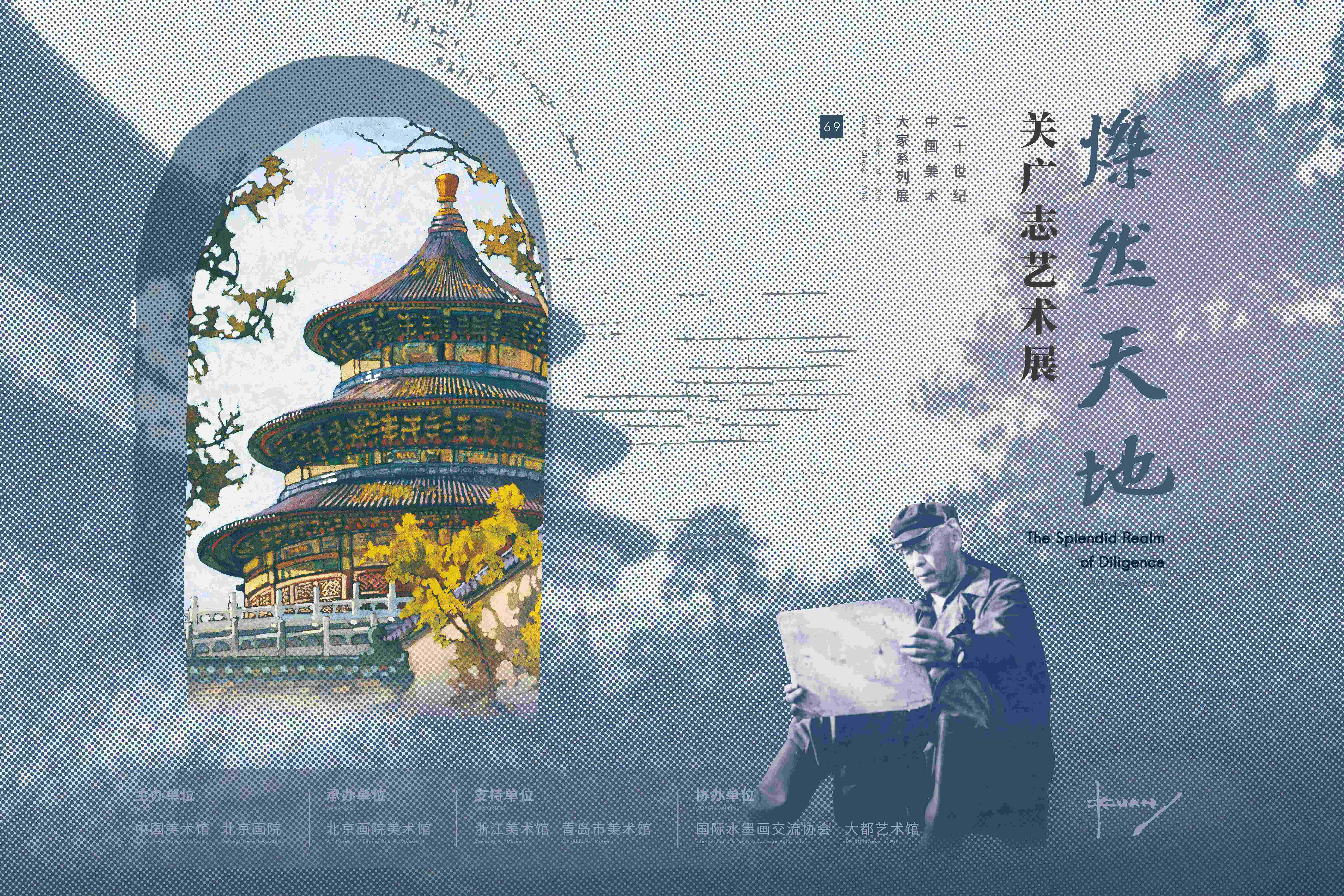
On August 7, 2026, the Art Museum of Beijing Fine Art Academy (BFAA) will unveil the Splendid Realm of Diligence: Art of Guan Guangzhi, the 69th presentation of its Twentieth-Century Chinese Art Masters Research Series. Guan Guangzhi (1896–1958) was a pioneering figure among China's first generation of watercolorists and one of the earliest Chinese students studying at the Royal Academy of Arts in the United Kingdom. His artistic career spanned multiple phases of watercolor painting in China — from its introduction from the West to its gradual development into a distinctly local art form. This exhibition brings together more than 70 of Guan's finest watercolors and copperplate engravings, inviting viewers to step back into those years of light and shadow and trace the artistic journey of this watercolor pioneer across a vast and varied landscape.
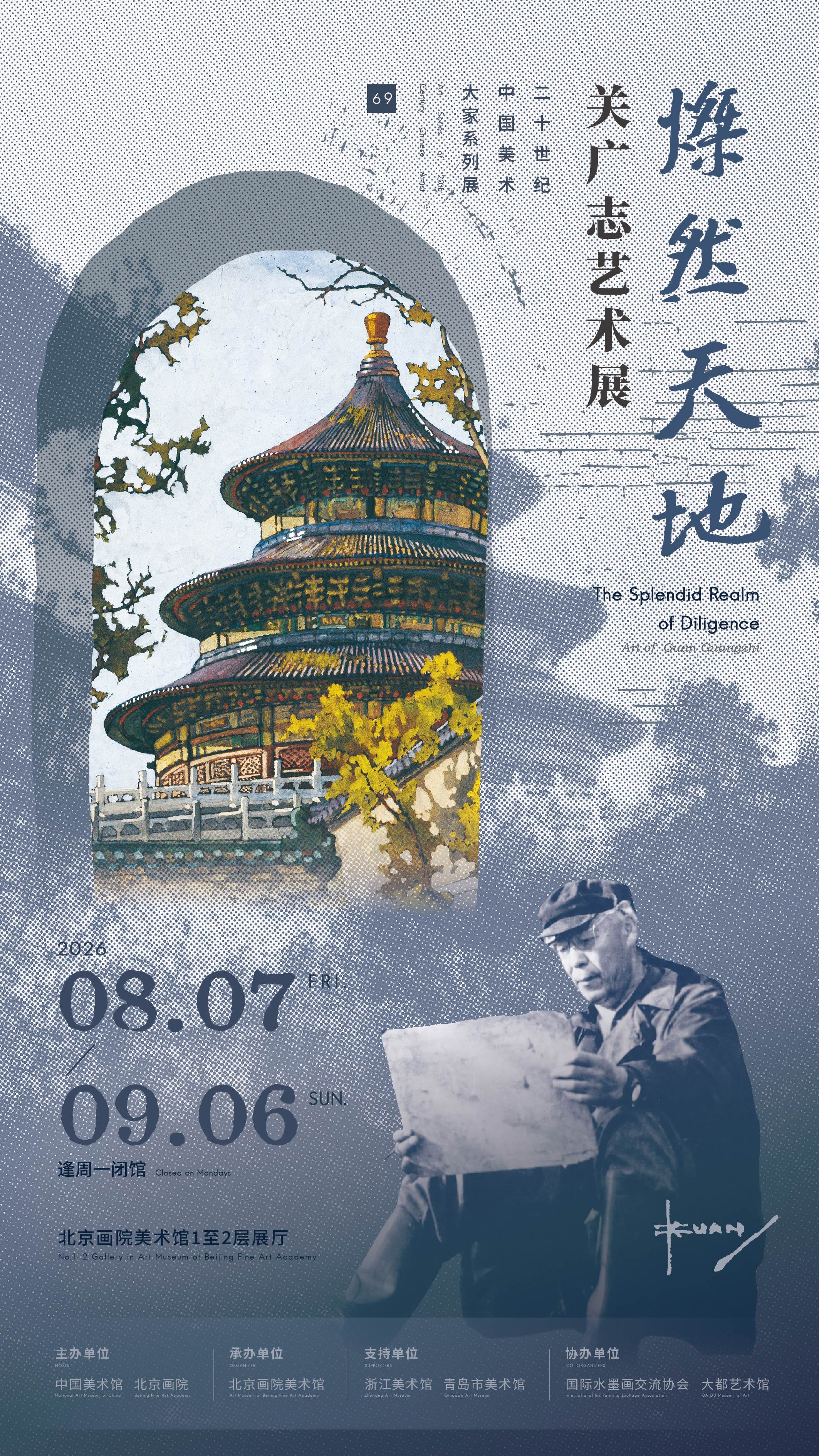
Exhibition Poster
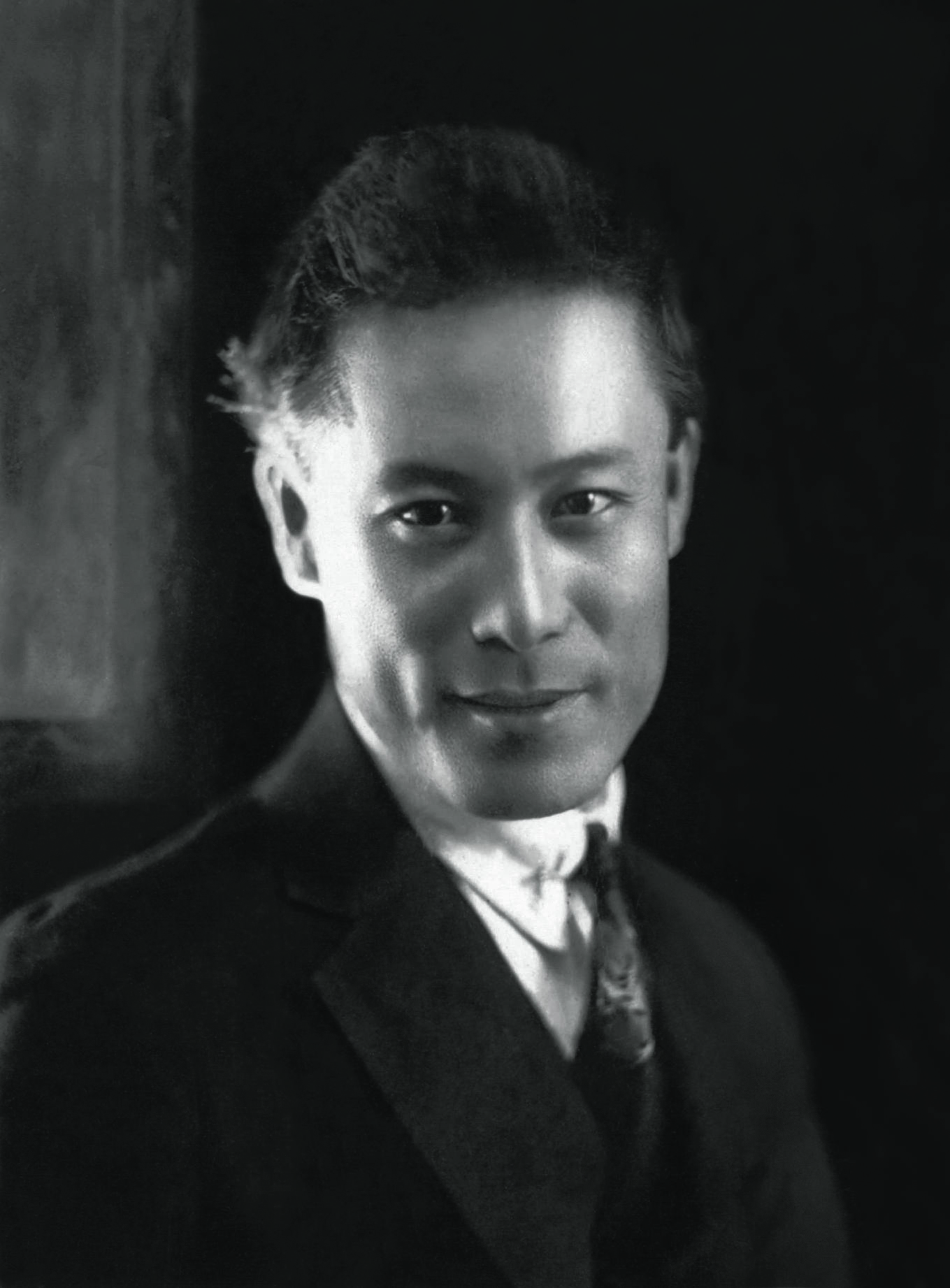
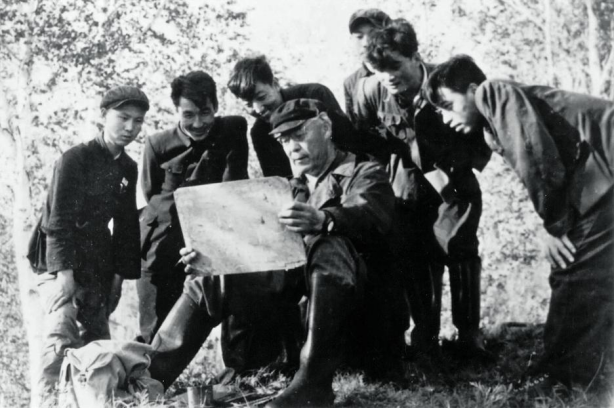
Guan Guangzhi in the 1930s
A spectrum of splendor: Fusion and transformation of techniques
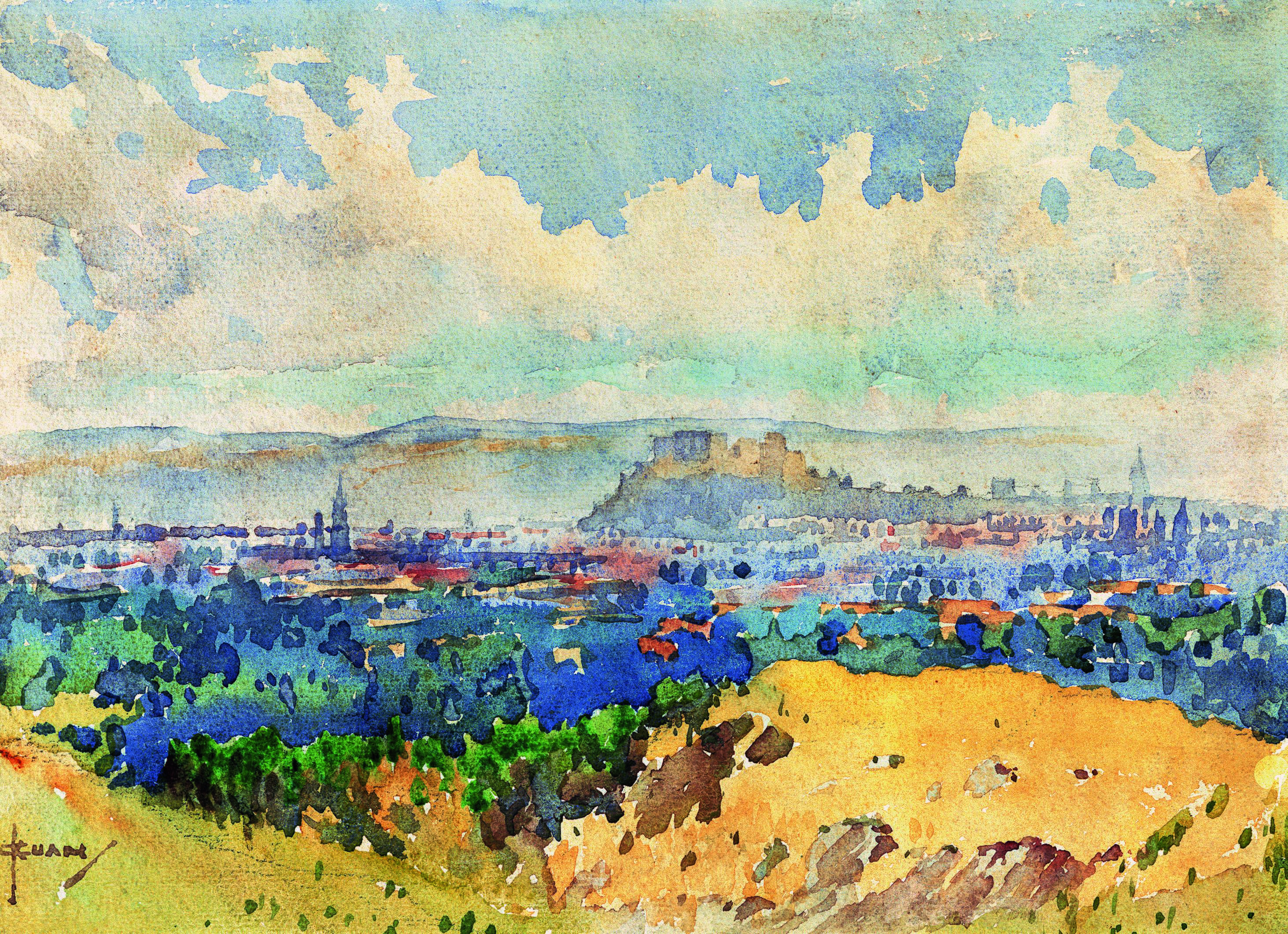
Guan Guangzhi received rigorous academic training at the Royal Academy of Arts in the UK. In his watercolor practice, he particularly admired J.M.W. Turner's exploration of light and color. Guan's works such as Morning in Edinburgh and Belfast Coast reveal a strong Impressionist influence, with soft light and shade and the characteristic thin, translucent, and textural quality of British watercolor. His compositions do not adhere rigidly to precise perspective or proportion, but instead explore the unique interplay of water and pigment.
Morning in Edinburgh
Guan Guangzhi , 1932 , watercolor on paper , 23.5×32cm
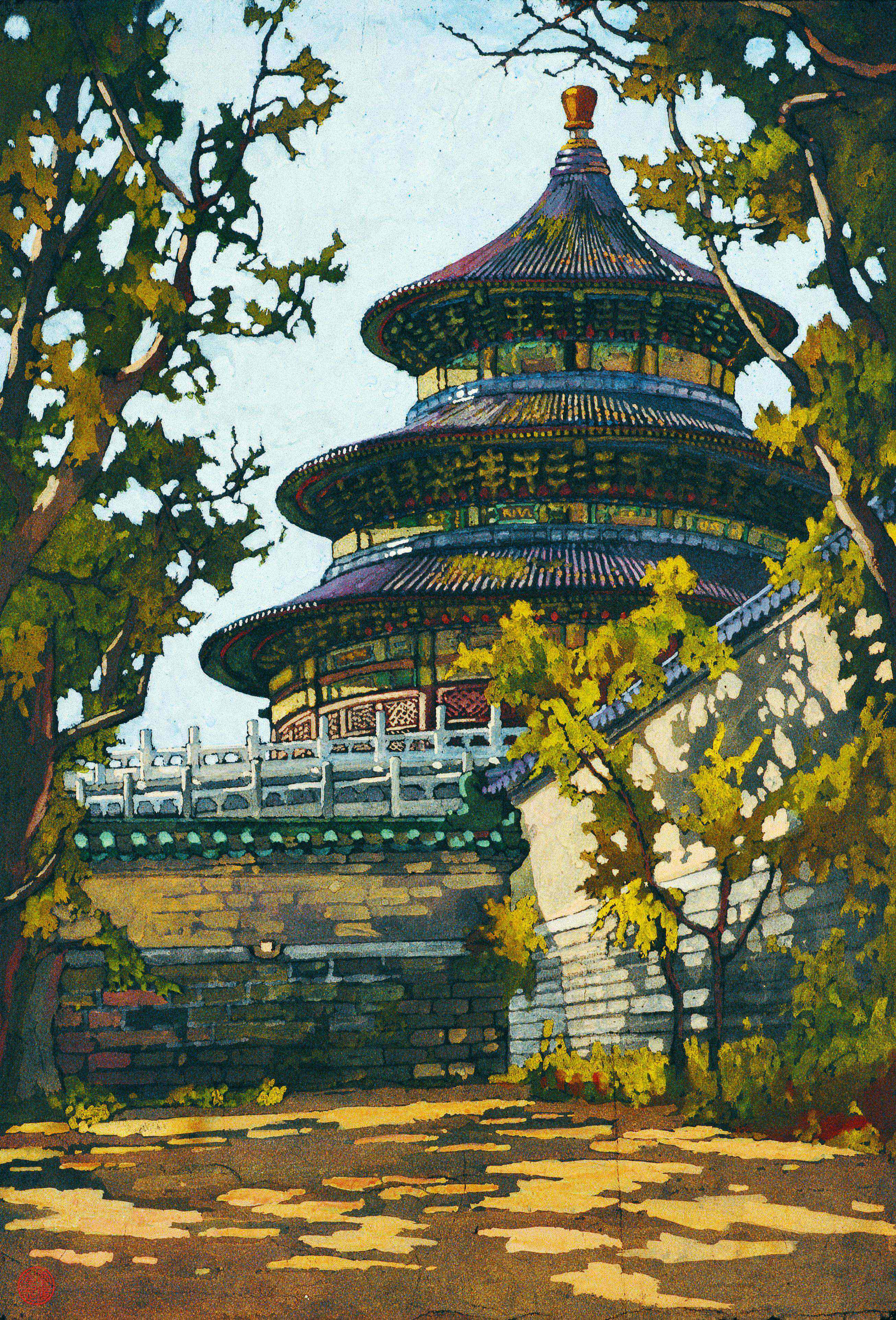
After returning to China, Guan sought to capture the weighty texture of ancient Chinese architecture. Breaking free from the constraints of traditional transparent watercolor, he developed an opaque watercolor technique — blending transparent watercolors with Italian "Penpra" white pigment on tinted paper or linen, and incorporating mineral pigments from traditional Chinese painting. Combined with techniques such as the "stitching method," his works retained the airy quality of watercolor while achieving the rich, luminous color of oil painting.
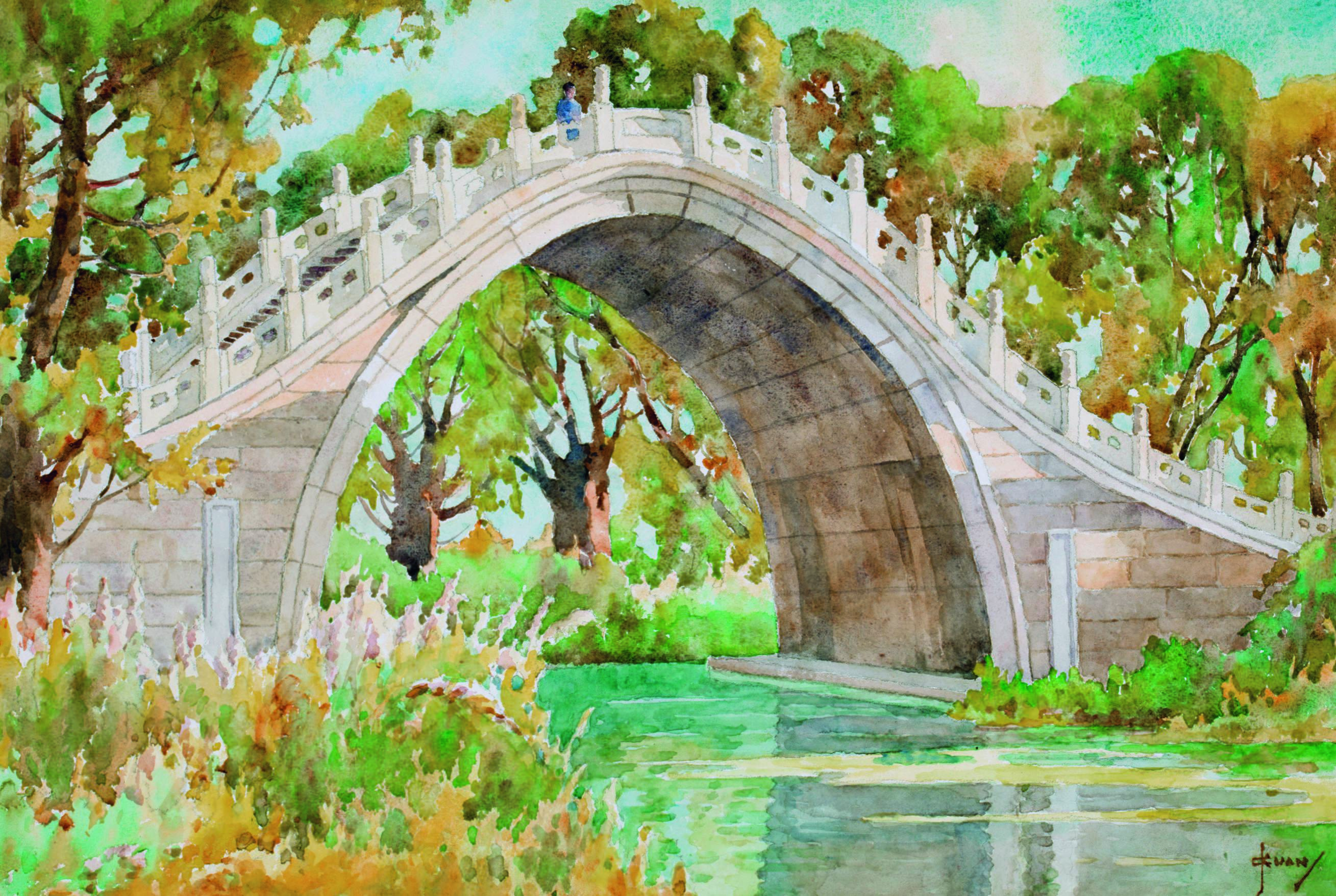
Jade Belt Bridge in the Summer Palace
Guan Guangzhi , 1940s , watercolor on paper , 37×54.5cm
Private Collection
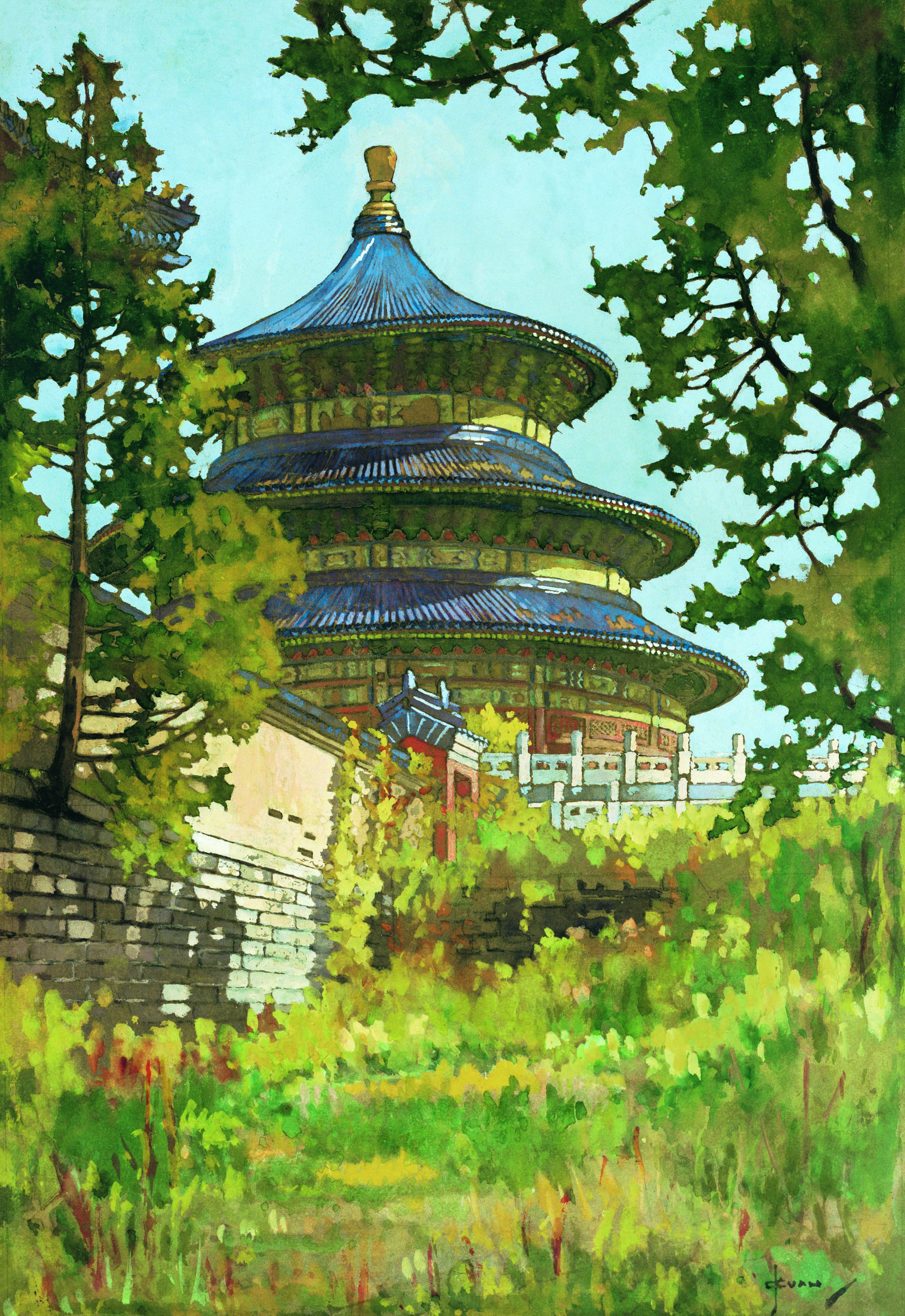
Temple of Heaven · Summer
Guan Guangzhi , 1940s, opaque watercolor on paper , 55×37cm
Private Collection
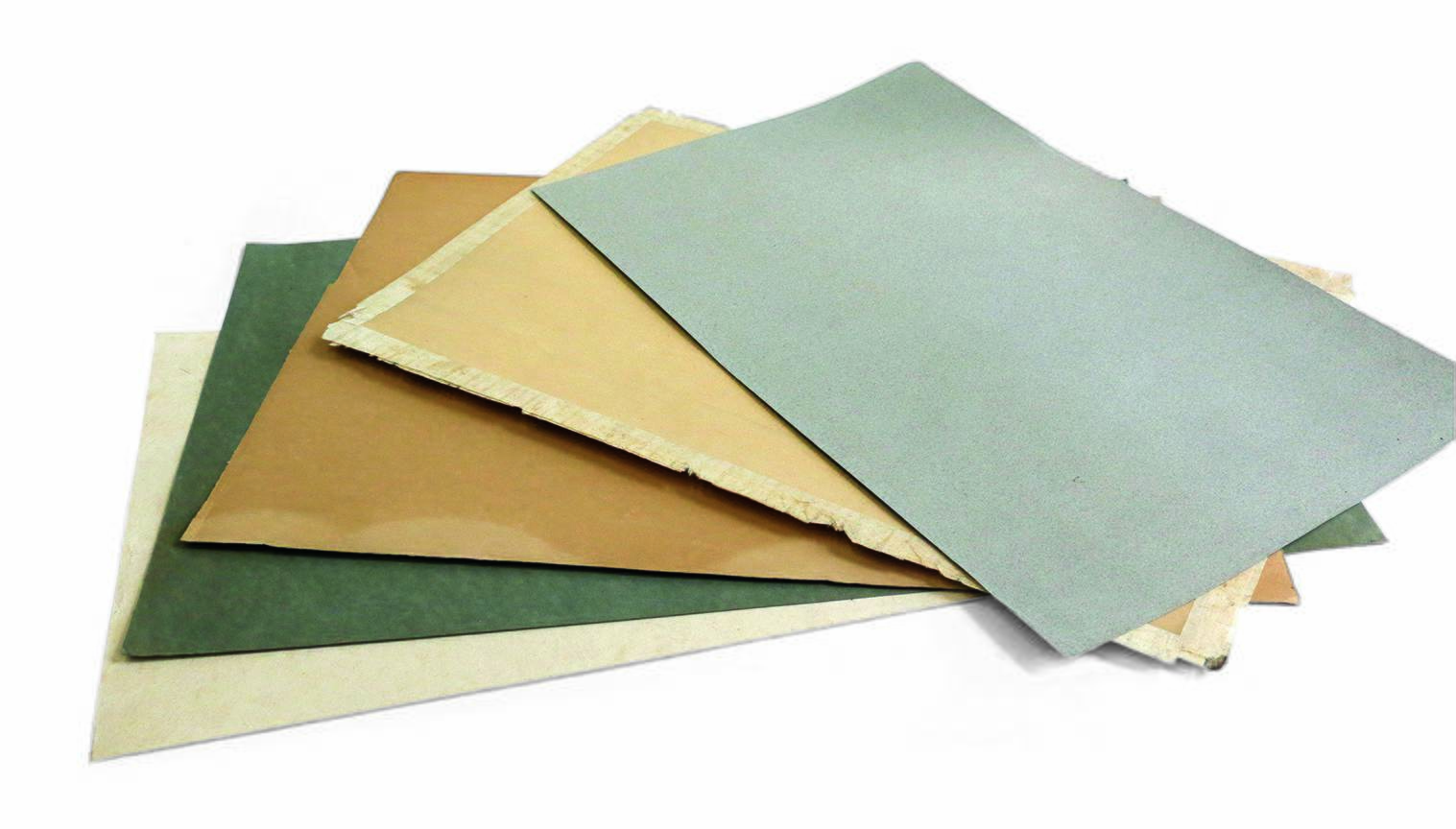
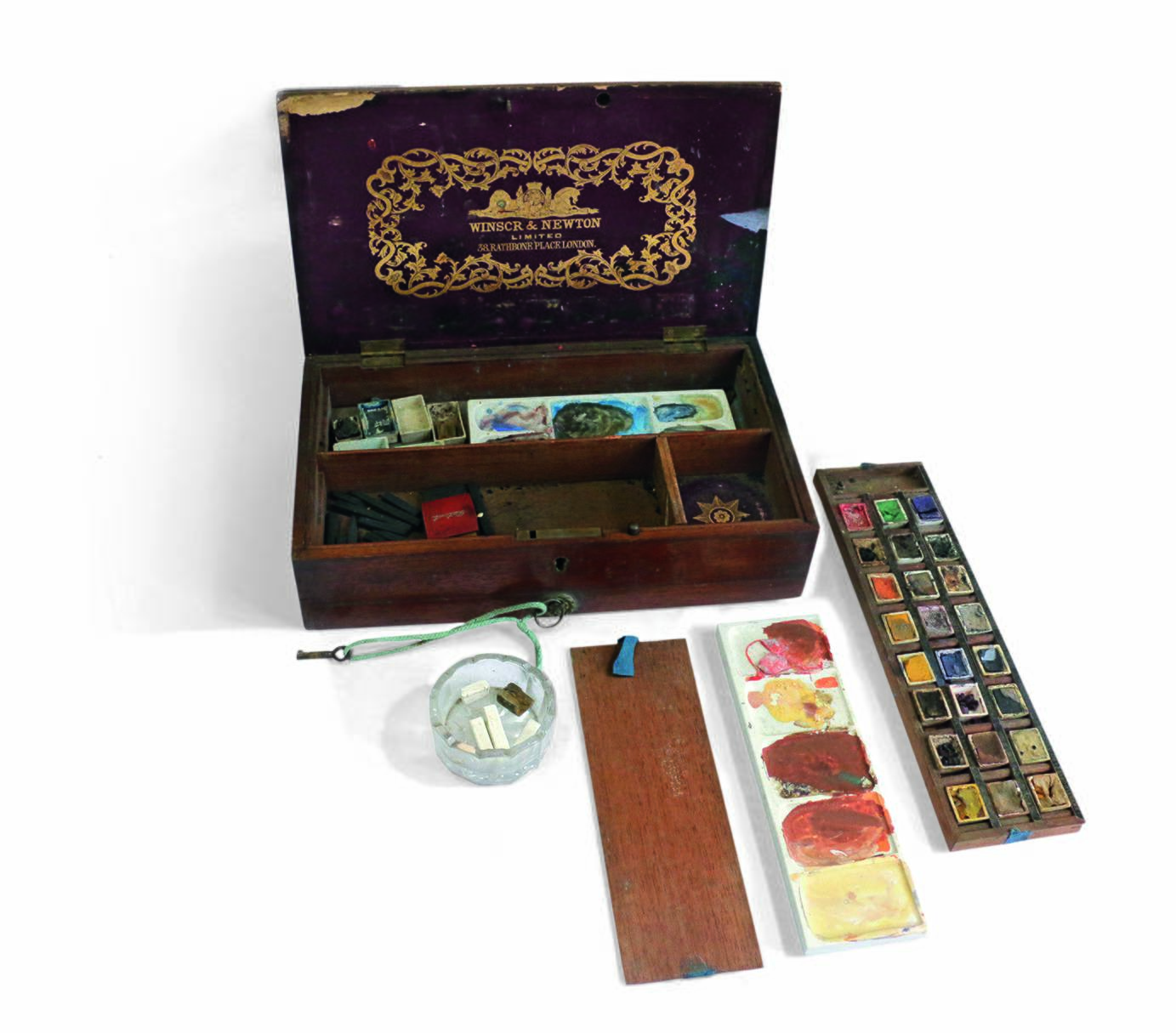
Watercolor paper used by Guan Guangzhi
Opaque watercolor kits used by Guan Guangzhi
Mountains and rivers unfold: A new chapter of the times through travel
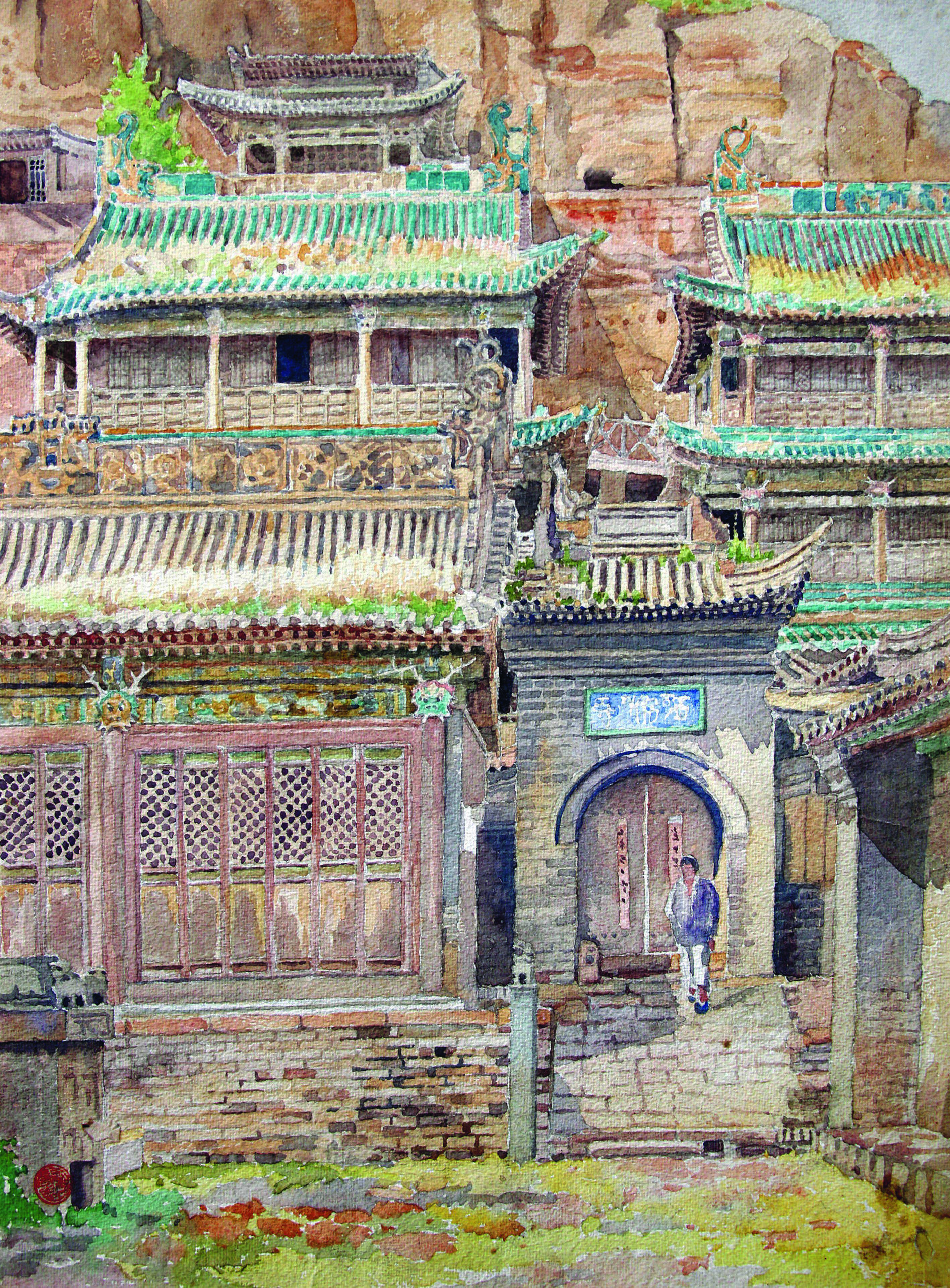
Sketching from life was a lifelong artistic practice for Guan Guangzhi. After the founding of the People's Republic of China, the country's historic sites, majestic landscapes, and new socialist construction opened a brand-new horizon for his work. In 1954, Guan led students from Tsinghua University's Department of Architecture to sketch at the Confucius Temple in Shandong and the Jinci Temple in Shanxi, producing classic artistic renderings of ancient architecture. In 1955, he joined a sketching expedition organized by the China Artists Association, traveling with Wu Zuoren (1908-1997), Xiao Shufang (1911-2005), and others to the grasslands of Inner Mongolia and the Greater Khingan Range in the northeast, capturing the new look of China's northern frontier. In 1956, he traveled south through Wuhan, Changsha, Shaoshan, and the Hengshan Mountain, documenting sacred revolutionary sites and urban construction with his brush.
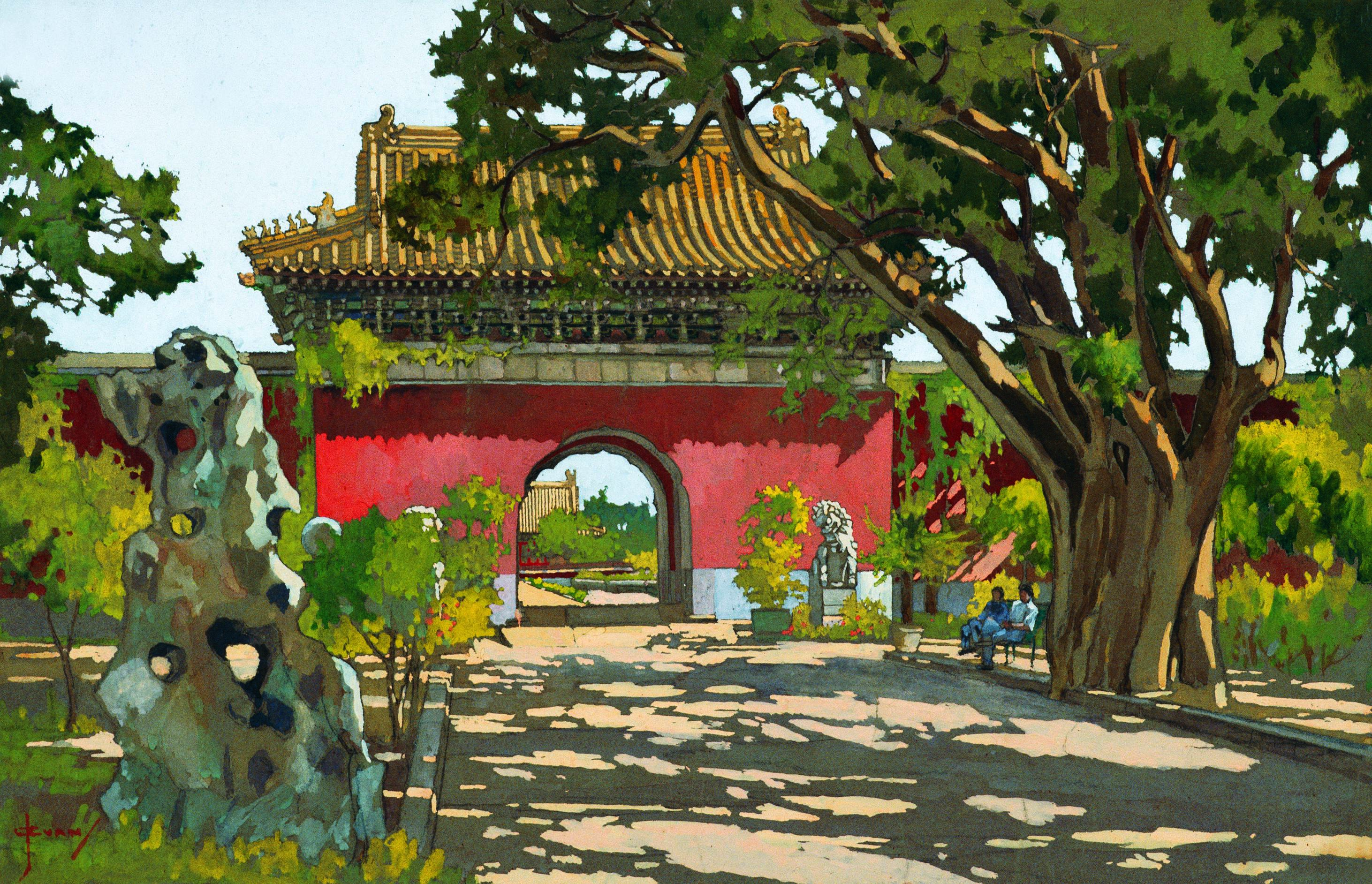
Guan's years of sketching practice also enriched his teaching, nourishing generations of students. Beijing Zhongshan Park, painted in 1952 while he was teaching at Tsinghua University, shows Guan's artistic style approaching full maturity. The work fully demonstrates Guan's mastery of materials. Through the blending of transparent and opaque pigments, he applied the wet-on-wet technique to reveal delicate textures in the shadowed areas, and the wet-on-dry technique to build up the highlights, achieving a concise, thick and luminous effect in the overall palette.
Beijing Zhongshan Park
Guan Guangzhi , 1952 , opaque watercolor on paper , 36.9×57cm
Collection of the National Art Museum of China
Temple of Heaven · Hall of Prayer for Good Harvests
Guan Guangzhi , 1951 , opaque watercolor on paper , 54.7×37.2cm
Collection of the National Art Museum of China
Yungang Grottoes
Guan Guangzhi , 1955 , watercolor on paper , 50×36.5cm
Private Collection
Guan Guangzhi teaching students of Tsinghua University's Department of Architecture
Etched cityscapes: The depth of history in copperplate engravings
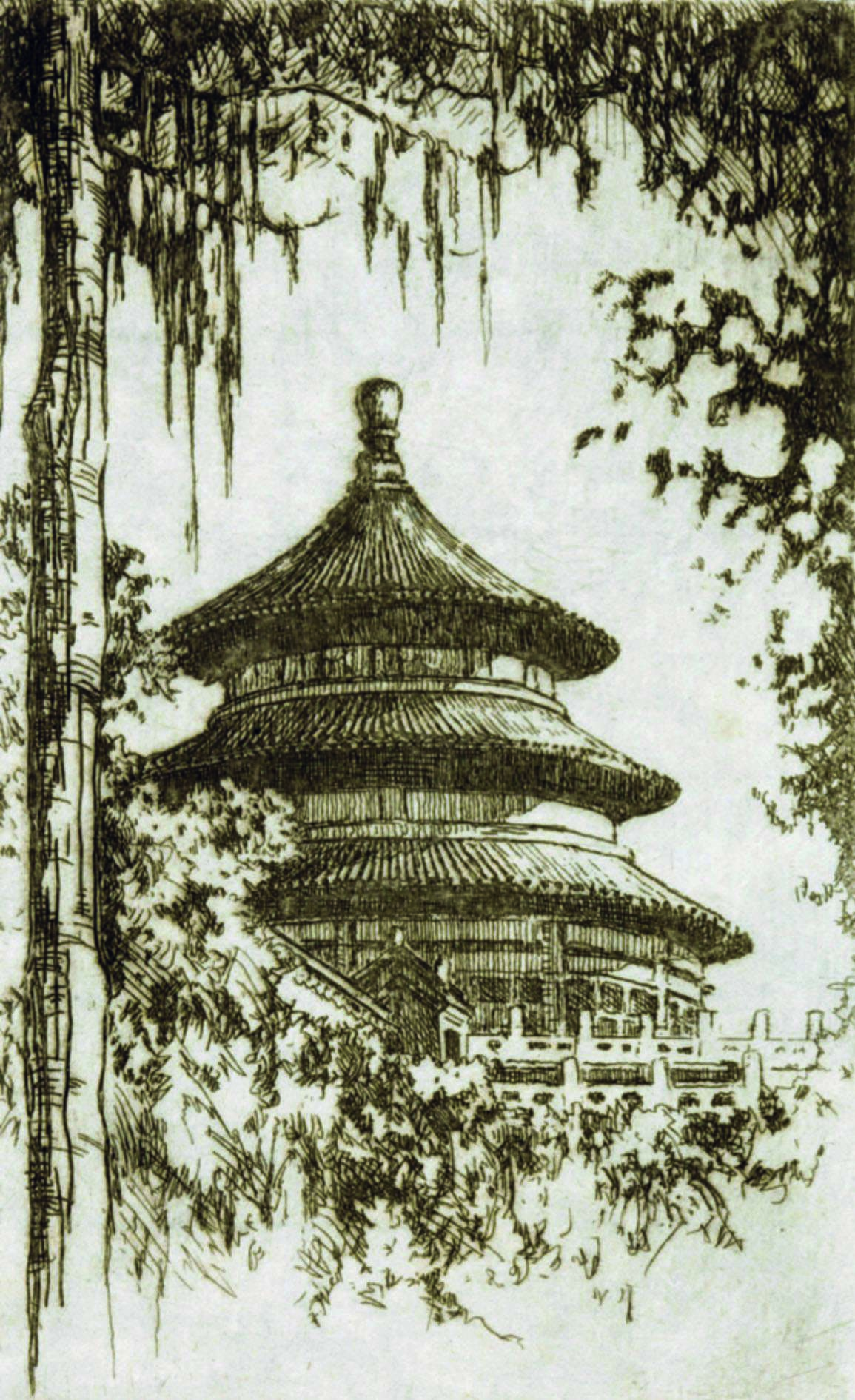
During his years in the UK, Guan Guangzhi studied under the renowned etcher Malcolm Osborne (1880-1963), systematically learning the tradition of "linear etching" that had developed since Rembrandt (1606-1669) in the 17th century, while also mastering "aquatint" and "drypoint" techniques. In 1934, he brought back from London China's first copperplate printing press, along with a large collection of tools and instructional materials. Using this new artistic medium, he documented the cityscape of Beiping (today's Beijing), developing a style marked by the rigorous discipline and refined elegance of the British academic tradition. From technical introduction to creative exploration, Guan advanced the localization of copperplate engraving in China. In this exhibition, visitors will see the English textbooks, tools, and original copperplates that Guan brought back from the UK, gaining insight into how the three techniques of linear etching, aquatint, and drypoint intersected in his work.
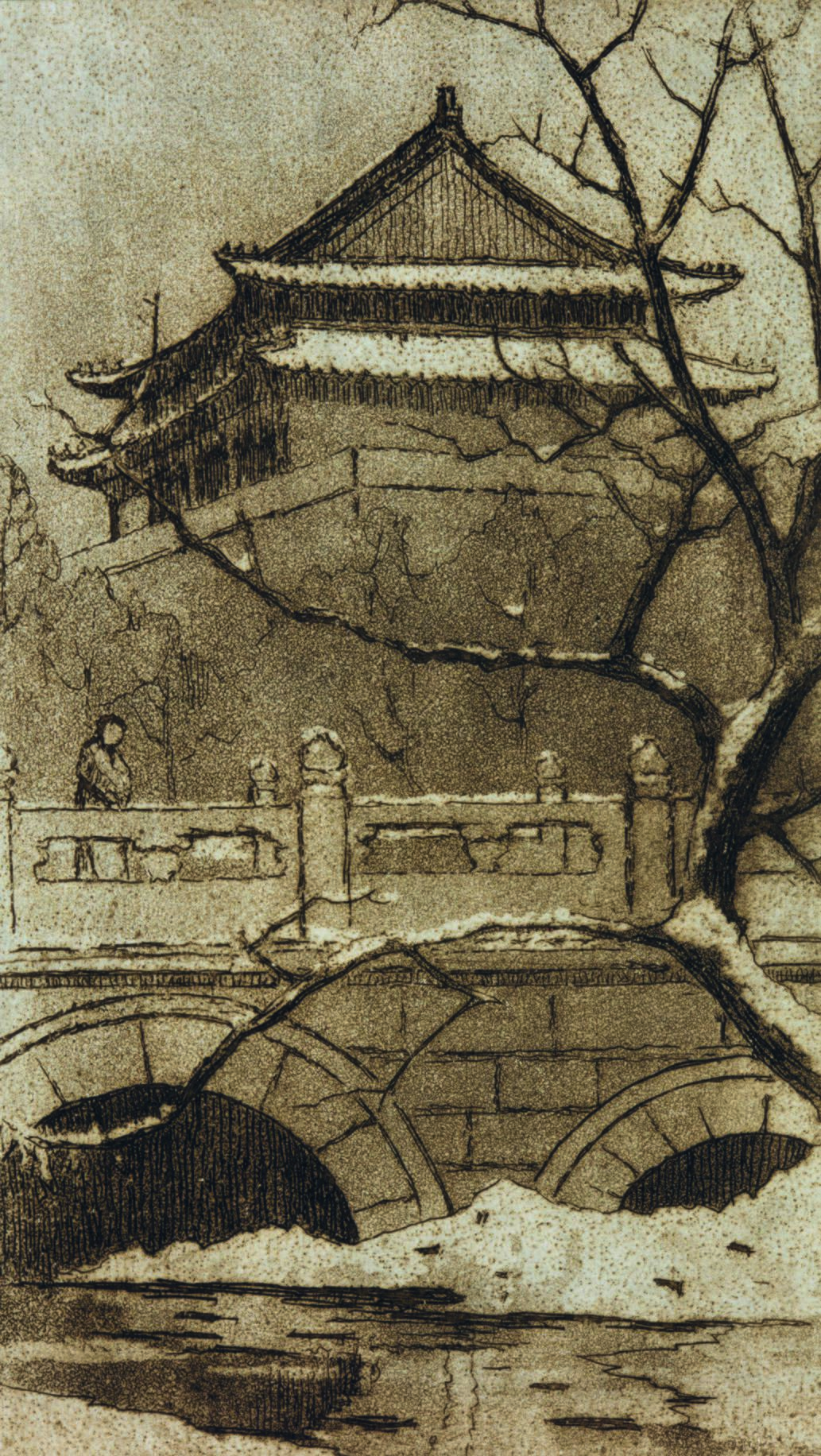
By the Golden Water Bridge
Guan Guangzhi , 1950s , copperplate engraving on paper , 13×7.5cm
Private Collection
Temple of Heaven
Guan Guangzhi , 1950s , copperplate engraving on paper , 13×7.5cm
Private Collection
"Splendid" is the most distinctive visual quality of Guan's watercolors. Brilliant, vibrant colors and clear, luminous light and shadow create a world of shining brilliance. Even his copperplate engravings, with their fine, even hatching and rich tonal gradations, convey a quiet yet radiant visual presence. This "splendid" is nature's vitality flowing through the brush, giving each work a clear and expansive life force.
"Realm" is the subject and field of Guan's art. From the ancient architecture of the Jinci Temple to the rock carvings of the Yungang Grottoes, from the cityscapes of the ancient capital to the new landscapes of the forest regions, his sketches always took the natural world as teacher, capturing forms through direct observation. This approach to art-making gave his works a broad horizon and a fresh, living quality.
Guan Guangzhi's creations, distilled through decades of practice, embody a quiet rationality — at once the scientific logic of Western realist painting and the poetic resonance of traditional Chinese art. This August, let's meet at the Art Museum of BFAA, and together, in the "Splendid Realm of Diligence," admire the master's luminous landscapes and his quiet, steadfast spirit — and feel the depth of an artistic contemplation that runs like still, deep water.