Speaking for Nature:The Sketching Travels of Ya Ming
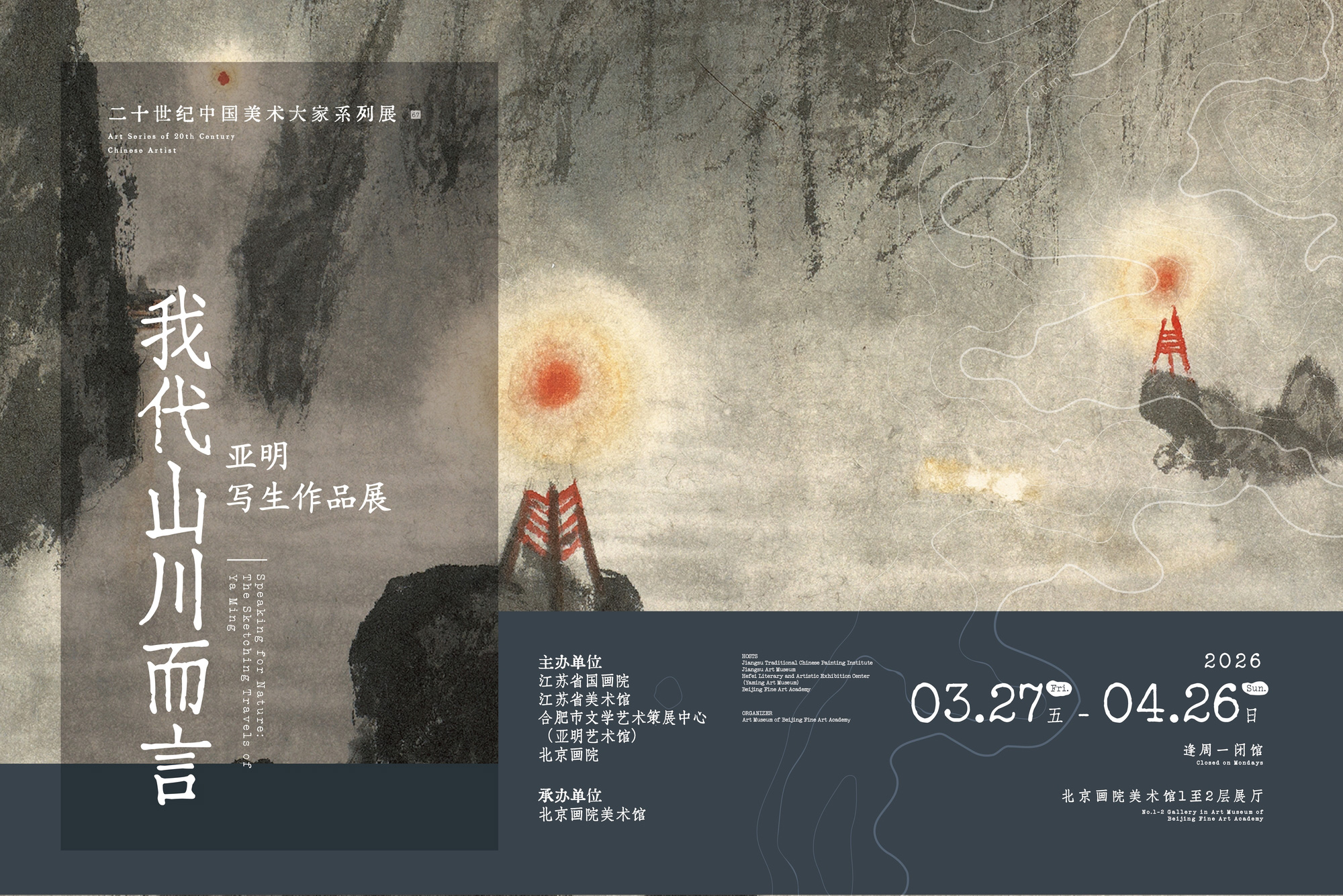
- show time:2026-03-27 to 2026-04-26
- Organizer:Jiangsu Traditional Chinese Painting Institute, Jiangsu Art Museum, Hefei Literature and Art Curation Center (Ya Ming Art Museum), Beijing Fine Art Academy
- venue:No.1-2 Gallery in Art Museum of Beijing Fine Art Academy
On March 27, 2026, the exhibition “Speaking for Nature:The Sketching Travels of Ya Ming” will open at the Art Museum of the Beijing Fine Art Academy. Centered on the theme of sketching from life, the exhibition features over sixty works created by Mr. Ya Ming between 1960 and 2000, capturing the landscapes and customs of diverse countries and regions.
Chinese painting can depict the world’s mountains, rivers, and customs; traveling to various countries to sketch is what I call “speaking for the mountains and rivers”.
——Ya Ming
Ya Ming traversed many lands throughout his life and painted numerous landscapes—from the “Twenty-three Thousand Li” (approx. 7,146 miles) Journey to the “Three Xiangs and Four Rivers” (Hunan Waterways) , from Jiangnan and the Southwest to the Northeast and Northwest, and from eulogizing rivers and mountains to sketching in foreign realms. Like postcards dispatched from the past, these sketches transcend time and borders to arrive before us, sharing the places he visited, the scenery he beheld, the insights gained on his journey, and the delight of new friendships.
Therefore, in curating this exhibition, we have sought to inscribe the exhibition within “postcards”. Beginning with the “Twenty-three Thousand Li” Journey of the Jiangsu Chinese Painting Sketching Group in 1960, we present his ceaseless exploration and stylistic transformation through dual domestic and foreign perspectives, “mailing” our understanding of Ya Ming’s art to every viewer.
Who is Ya Ming?
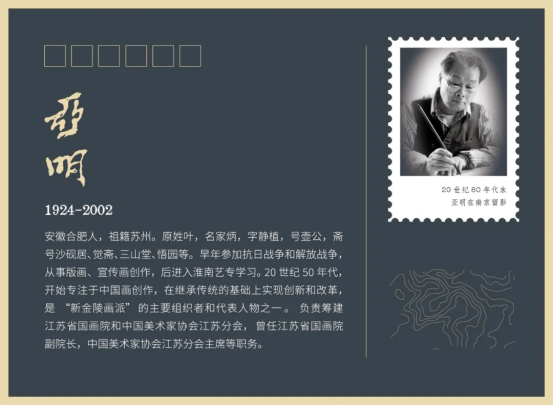
Ya Ming (1924–2002)
Ya Ming, originally named Ye Jiabing, joined the New Fourth Army guerrillas in 1939 at the age of sixteen to resist Japanese aggression. At eighteen, he was selected by the army to pursue advanced studies in the Drama Department of the Huainan Art School. Harboring a deeper passion for painting than for drama, he successfully transferred to the Art Department under the guidance of his teacher, Cheng Yajun, and adopted the name Ya Ming.
Ya Ming was an artist nurtured amidst the fires of revolution and a representative figure of the Jiangsu Traditional Chinese Painting Institute. As both an organizer and a participant in the seminal 1960 “Twenty-three Thousand Li” sketching tour by the Jiangsu Chinese painting community, he propelled the birth and ascent of the New Jinling School of Painting, making significant contributions to the inheritance and innovation of Chinese painting in the modern and contemporary eras.
A Sketching Journey of Twenty-three Thousand Li
In September 1960, Ya Ming, then Vice President of the Jiangsu Traditional Chinese Painting Institute, alongside President Fu Baoshi, led the Jiangsu Chinese Painting Sketching Group on a three-month journey of creation and sketching, departing from Nanjing. Spanning three generations, the thirteen-member delegation was headed by Fu Baoshi, with Ya Ming as deputy. Members included painters Wei Zixi, Song Wenzhi, Qian Songyan, Yu Tongfu, Ding Shiqing, and Zhang Jin; Wang Xuyang (a teacher from the Luxun Academy of Fine Arts), Sui Guanrong (a teacher from the Fine Arts Department of the Nanjing University of the Arts), and three students of Chinese painting: Zhu Xiuli, Tai Qiyou, and Huang Mingqian.
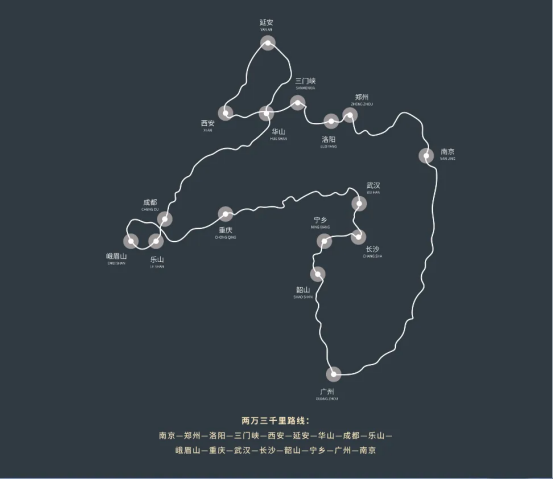
The Twenty-three Thousand Li Sketching Route
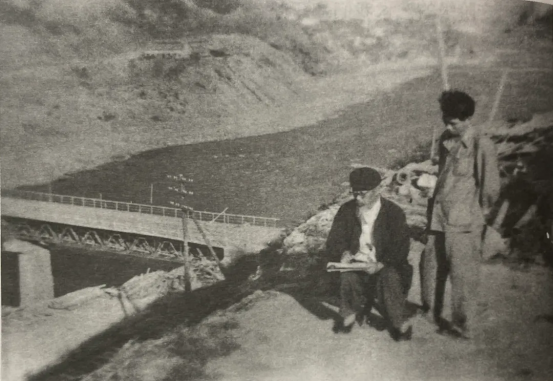
Ya Ming observing Yu Tongfu sketching
at the Sanmenxia Hydroelectric Power Station
Traversing a total of Twenty-three Thousand Li, this collective sketching tour was a monumental journey destined to be chronicled in history. Along their route, these artists engaged in observation, sketching, creation, and exchange, exploring with peers across the nation the pivotal artistic proposition of “how the traditional brush and ink in Chinese painting can reflect real life”. Renowned for his expertise in figure painting, Ya Ming not only produced such classics as Discharged from the Hospital and Old Guerrilla in Northern Shaanxi during this journey but also turned his focus toward the depiction of landscapes, local customs, and scenes of production and construction.
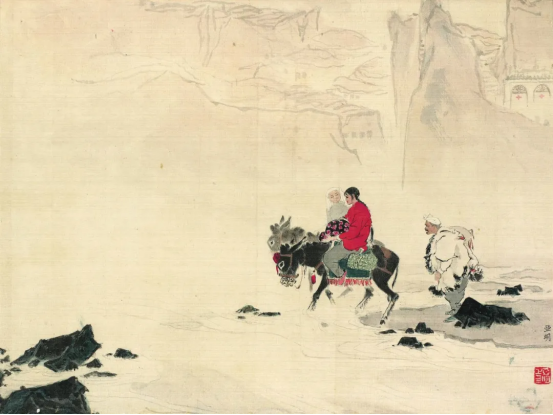
Discharged from the Hospital, Ya Ming, 26cm × 35cm
Ink and Color on Silk, 1961, Private Collection
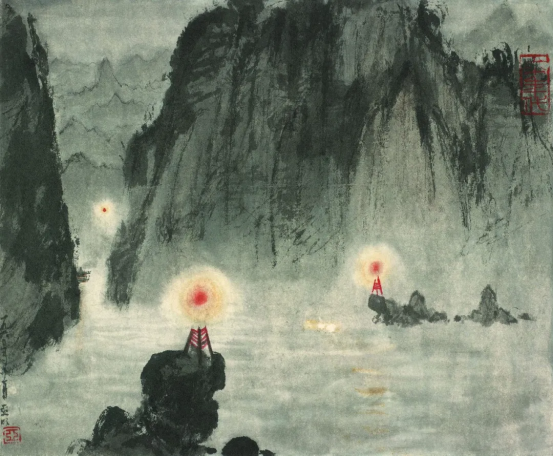
Night Voyage, Ya Ming, 28cm × 34cm
Ink and Color on Paper, Private Collection
Situated at the center of the Exhibition Hall on the first floor is a distinctive ensemble: the Steel Sketch Collection, comprising ten paintings. Created by Ya Ming following his visits to the Chongqing Iron and Steel Plant and the Wuhan Iron and Steel Corporation to gather source materials, this series of sketches vividly depicts the smelting process and the atmosphere of production, capturing the spectacle of “molten iron and flying steel sparks”. The works ingeniously integrate the ink wash of traditional Chinese painting with the blank spaces left on the paper to render the reflection of furnace fires. As Ya Ming himself remarked: “This album is neither traditional figure painting nor landscapes, nor does it belong to any other established category. This brand-new genre is endowed by the times, endowed by life. ”
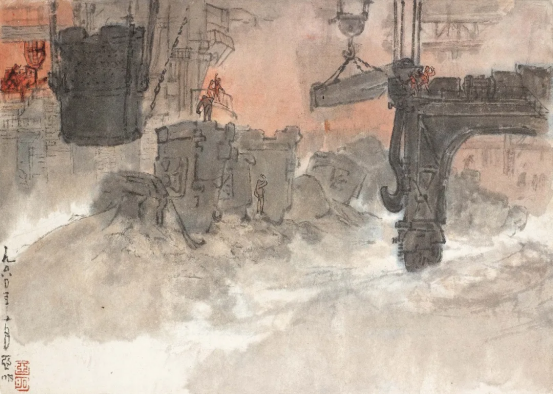
Steel Sketch Collection (No. 1), Ya Ming, 28.5cm × 39cm
Ink and Color on Paper, 1960, Private Collection
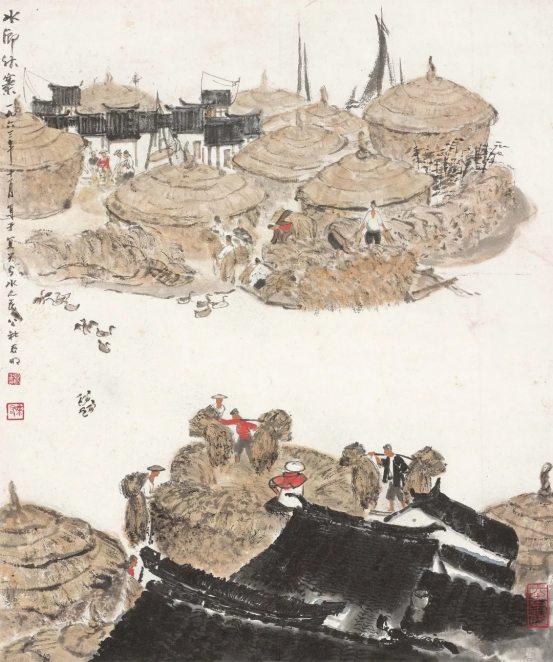
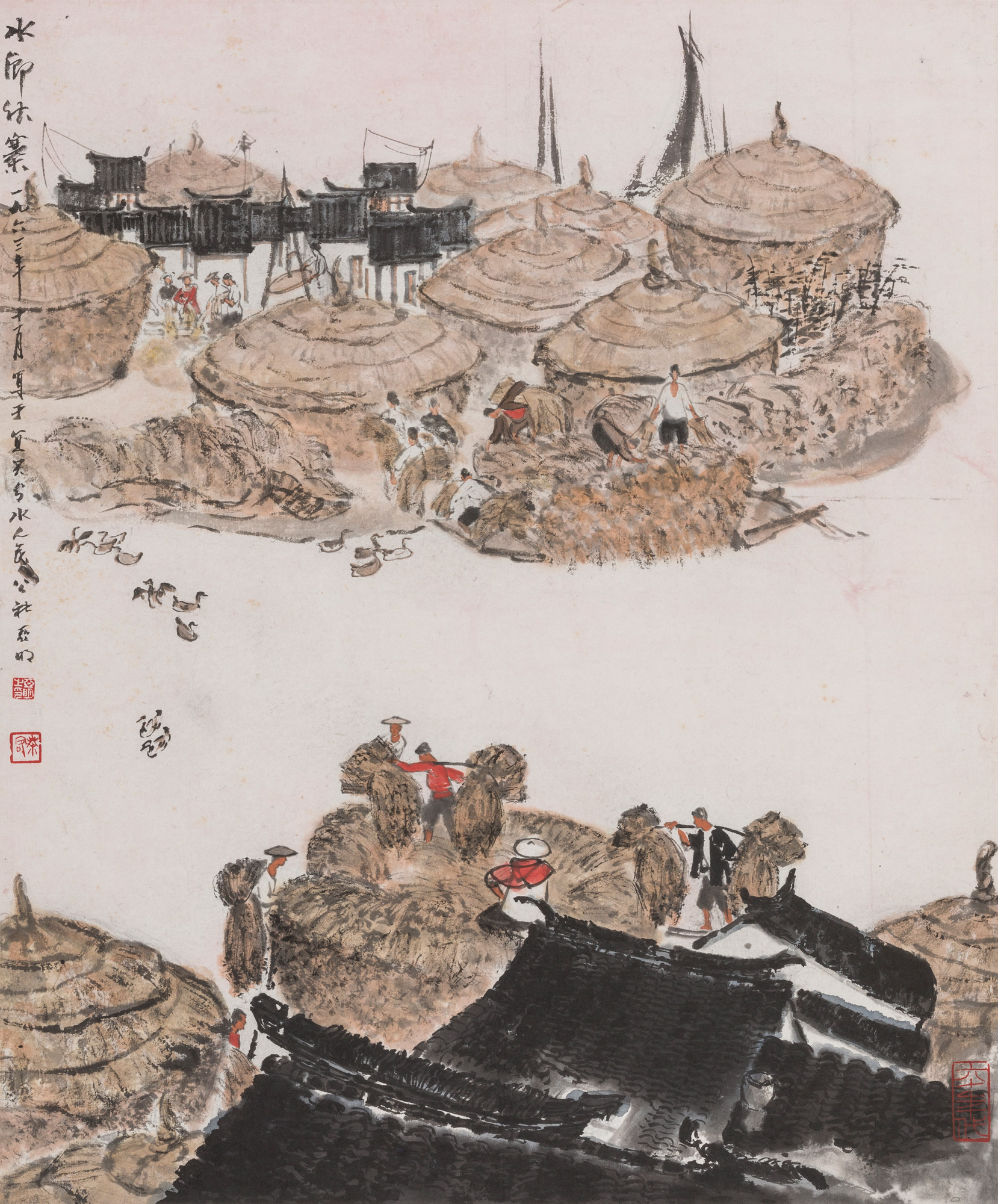
Autumn Village in a Water Town, Ya Ming, 56.5cm × 47cm
Ink and Color on Paper, 1963, Collection of Jiangsu Traditional Chinese Painting Institute
Overseas Sketching
In 1953, at the age of thirty, Ya Ming ventured abroad for the first time with the China-Soviet Friendship Delegation. Over the ensuing four decades, he traveled to nearly twenty countries, producing over six hundred sketches. Executed with the brush, these works are rooted in national soil; they not only uphold the pursuit of traditional Chinese brushwork and spirit but also demonstrate his study of the principles of both Eastern and Western painting.
Landscapes and spirits of diverse lands—all captured by one brush. There is no inherent national boundary in traditional Chinese painting, contrary to common assumption.
— Ya Ming, Self-Narrative at Seventy
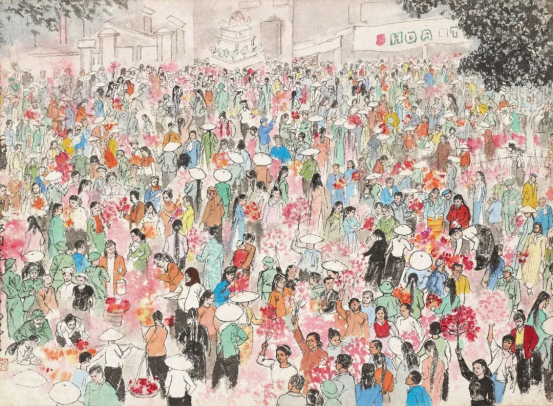
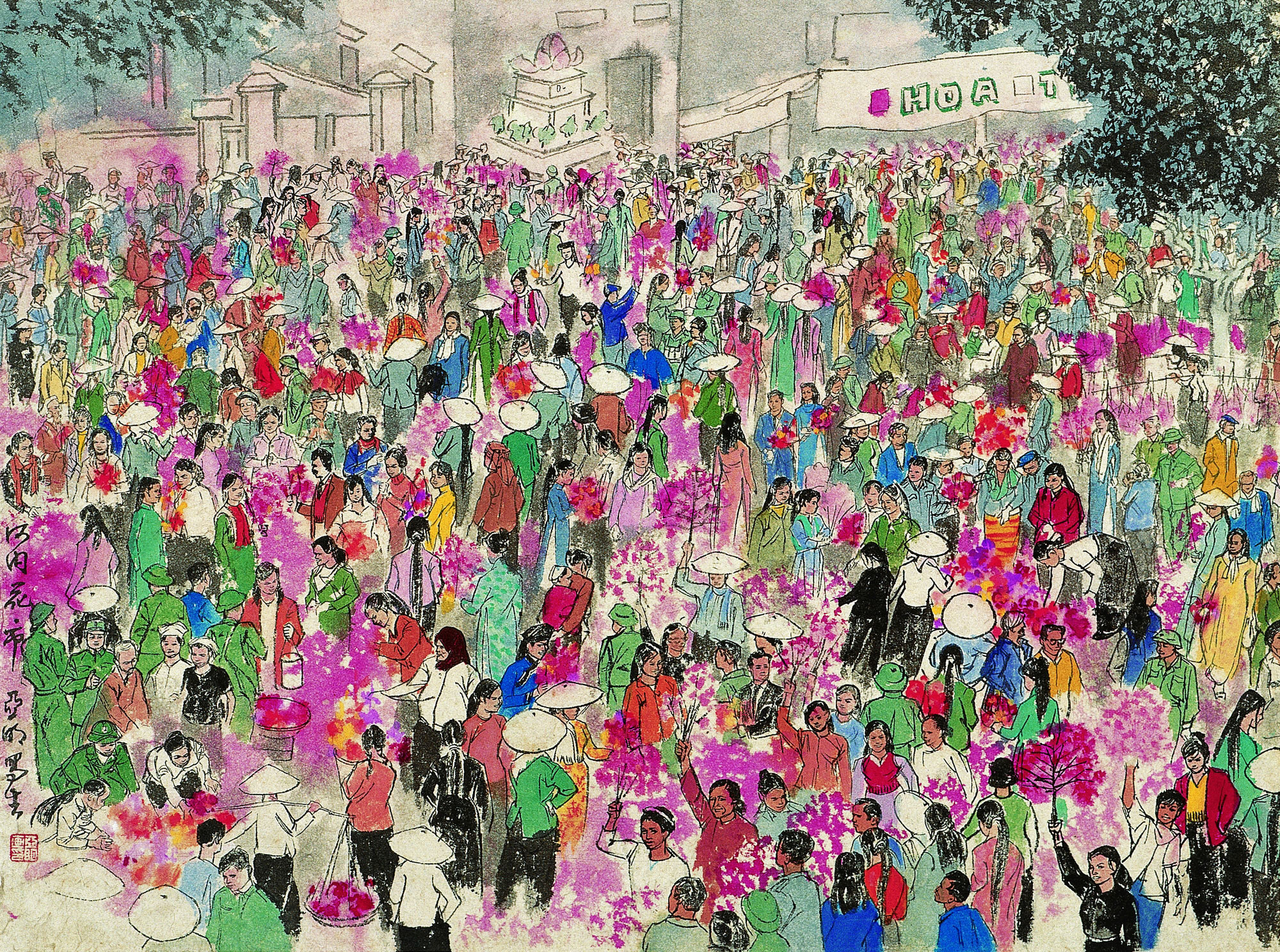
Flower Market in Hanoi, Ya Ming, 34cm × 46cm, Ink and Color on Paper
1974, Collection of Hefei Literature and Art Curation Center (Ya Ming Art Museum)
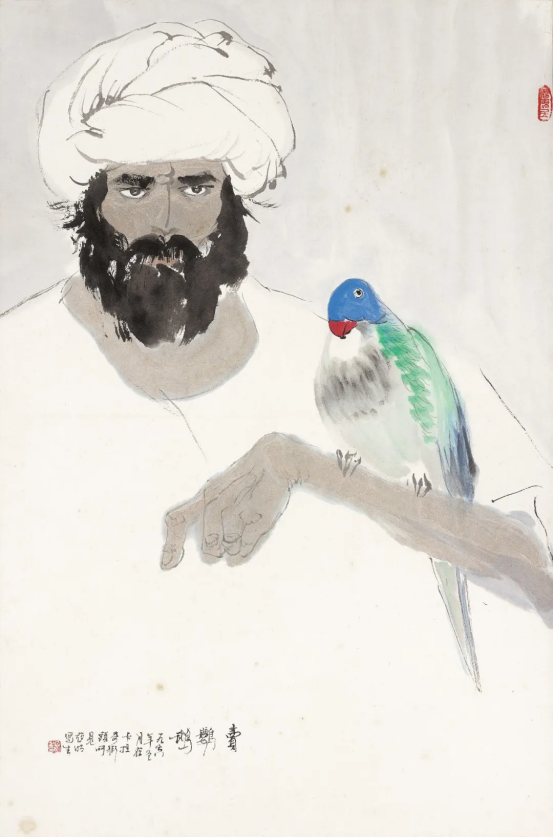
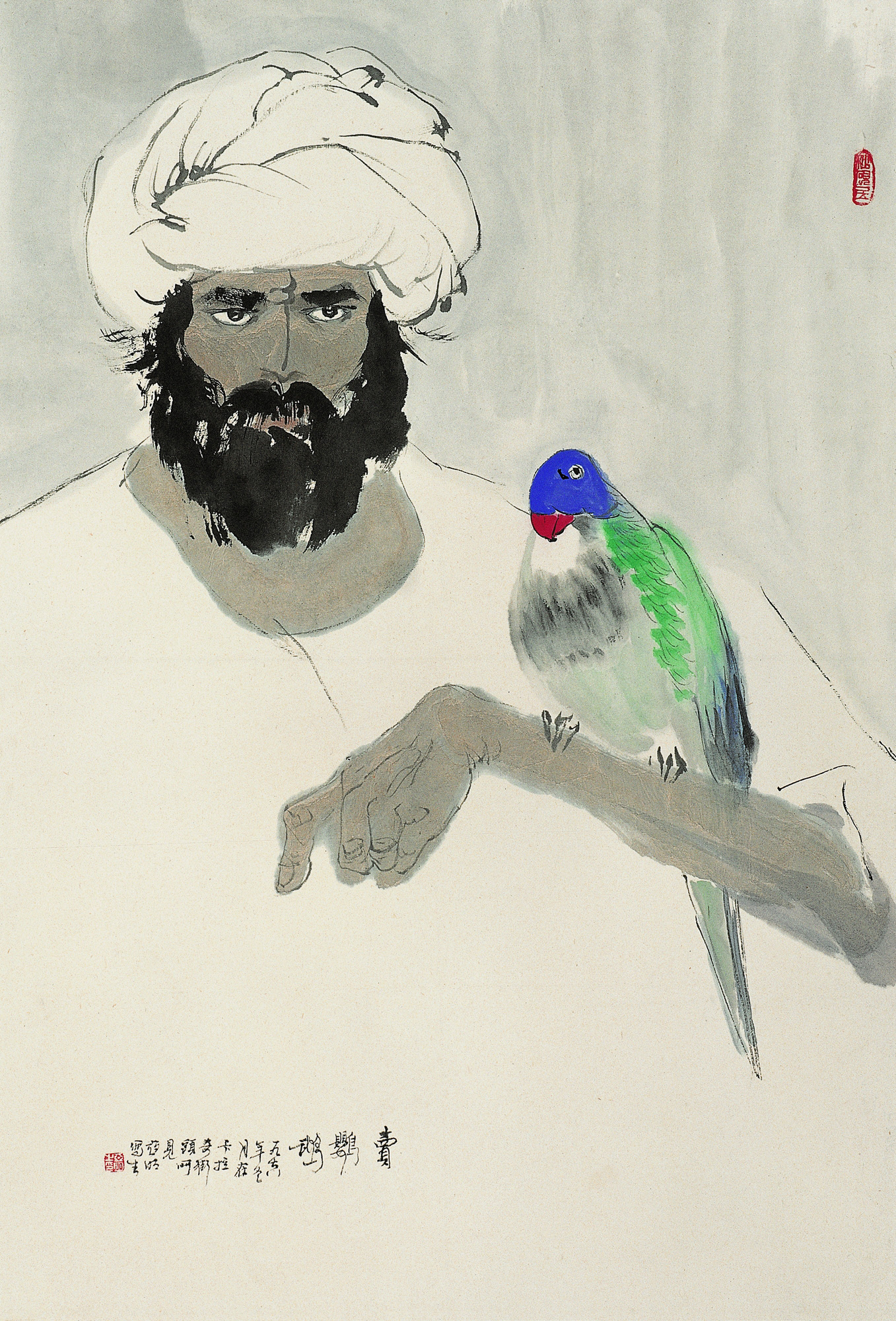
Selling Parrots, Ya Ming, 68cm × 45.5cm, Ink and Color on Paper
1978, Collection of Hefei Literature and Art Curation Center (Ya Ming Art Museum)
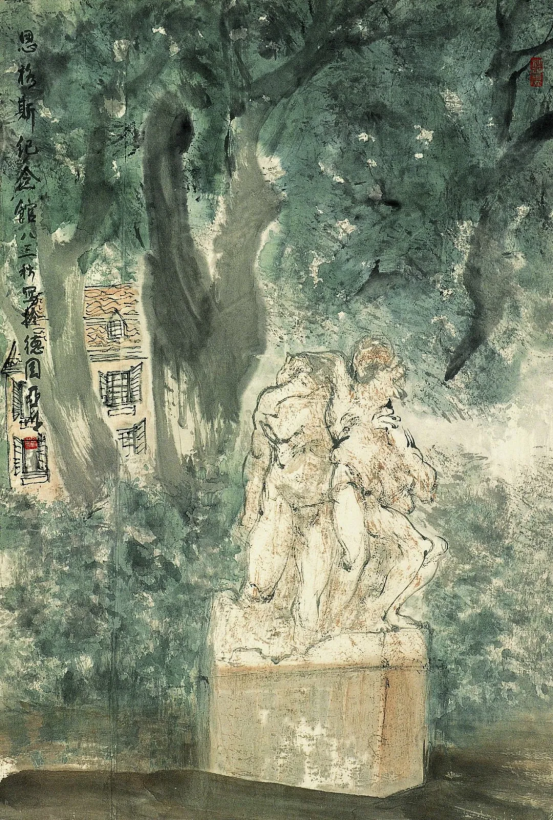
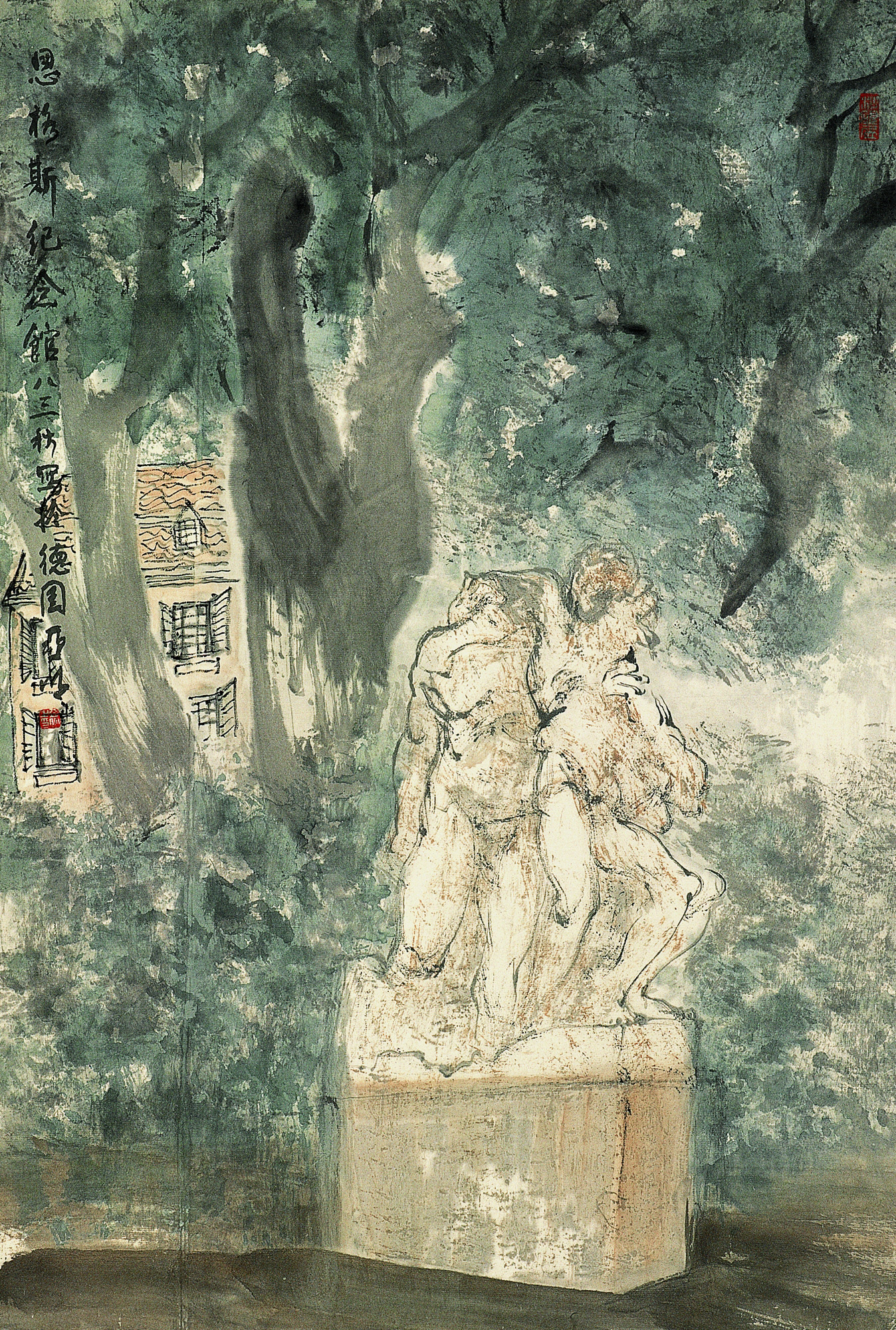
Engels Memorial Hall, Ya Ming, 68cm × 47cm, Ink and Color on Paper
1983, Collection of Hefei Literature and Art Curation Center (Ya Ming Art Museum)
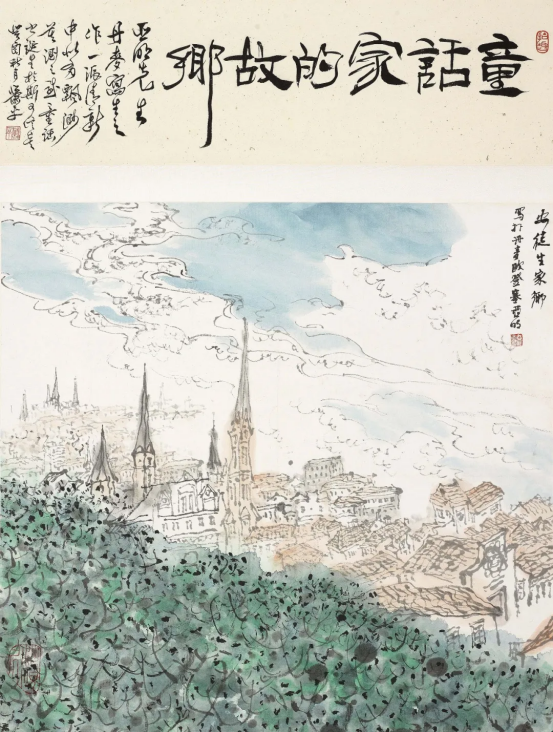
Andersen’s Hometown, Ya Ming, 45cm × 47.5cm
Ink and Color on Paper, 1980s, Collection of Jiangsu Art Museum
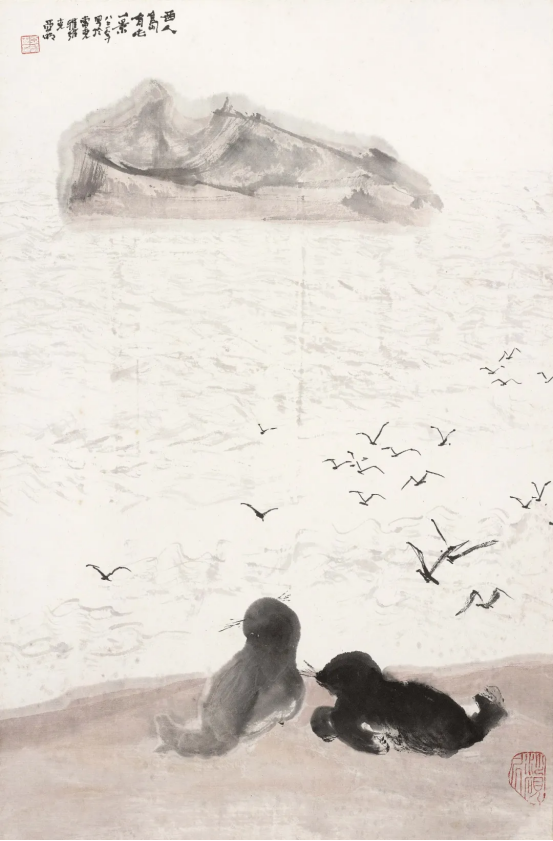
Westman Islands: Such a Scene, Ya Ming, 66.5cm × 44.5cm
Ink and Color on Paper, 1983
Collection of Hefei Literature and Art Curation Center (Ya Ming Art Museum)
Amidst the tidal wave of reform in Chinese painting during the new era, Mr. Ya Ming steadfastly upheld the artistic philosophy that “brush and ink should follow the times” and that “Chinese painting possesses principles but no fixed methods”. He learned from tradition through creation and sought transformation in new life. By depicting the scenic allure of global landscapes with Chinese painting, he continually expanded the expressive boundaries of traditional brushwork through overseas subjects.
In 1985, the Exhibition of Ya Ming’s Visits to Five Nordic Countries was held in Beijing, marking the artist’s sole solo exhibition in the capital during his lifetime. Now, forty years later, with the support of the Jiangsu Traditional Chinese Painting Institute, the Jiangsu Art Museum, the Hefei Literature and Art Curation Center (Ya Ming Art Museum), and Ya Ming’s family members, his solo exhibition returns to Beijing to meet the public. This exhibition stands as the sixty-seventh project in the Art Series of 20th Century Chinese Artist at the Art Museum of the Beijing Fine Art Academy.
From March 27 to April 26, we invite you to step into the Art Museum of the Beijing Fine Art Academy and receive a “postcard” that transcends time and space. It is our hope that the beautiful scenery depicted by Ya Ming’s brush may bring you solace, allowing you to make peace with life’s vexations.
Works Picture
-
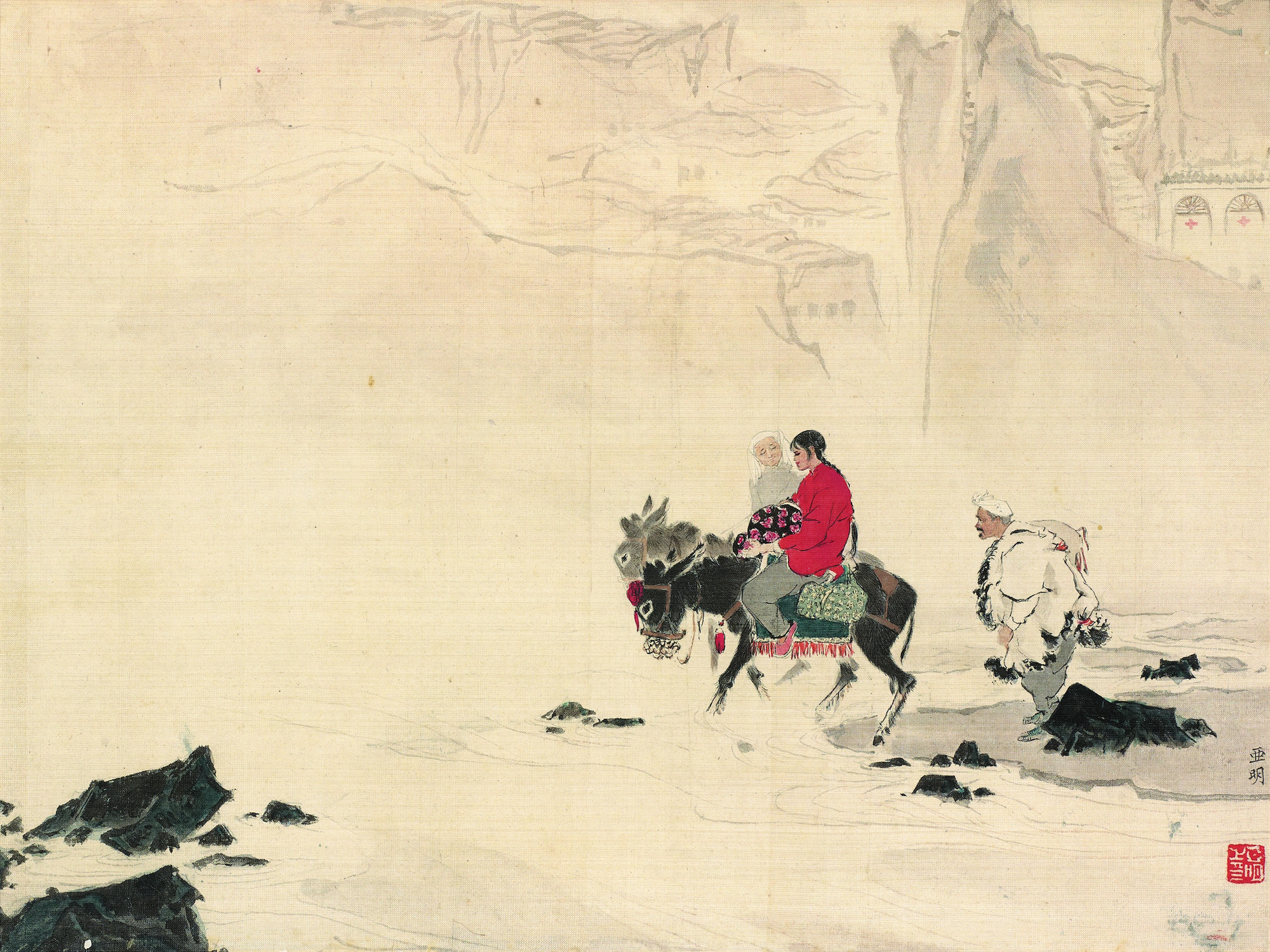 Discharged from the Hospital
-
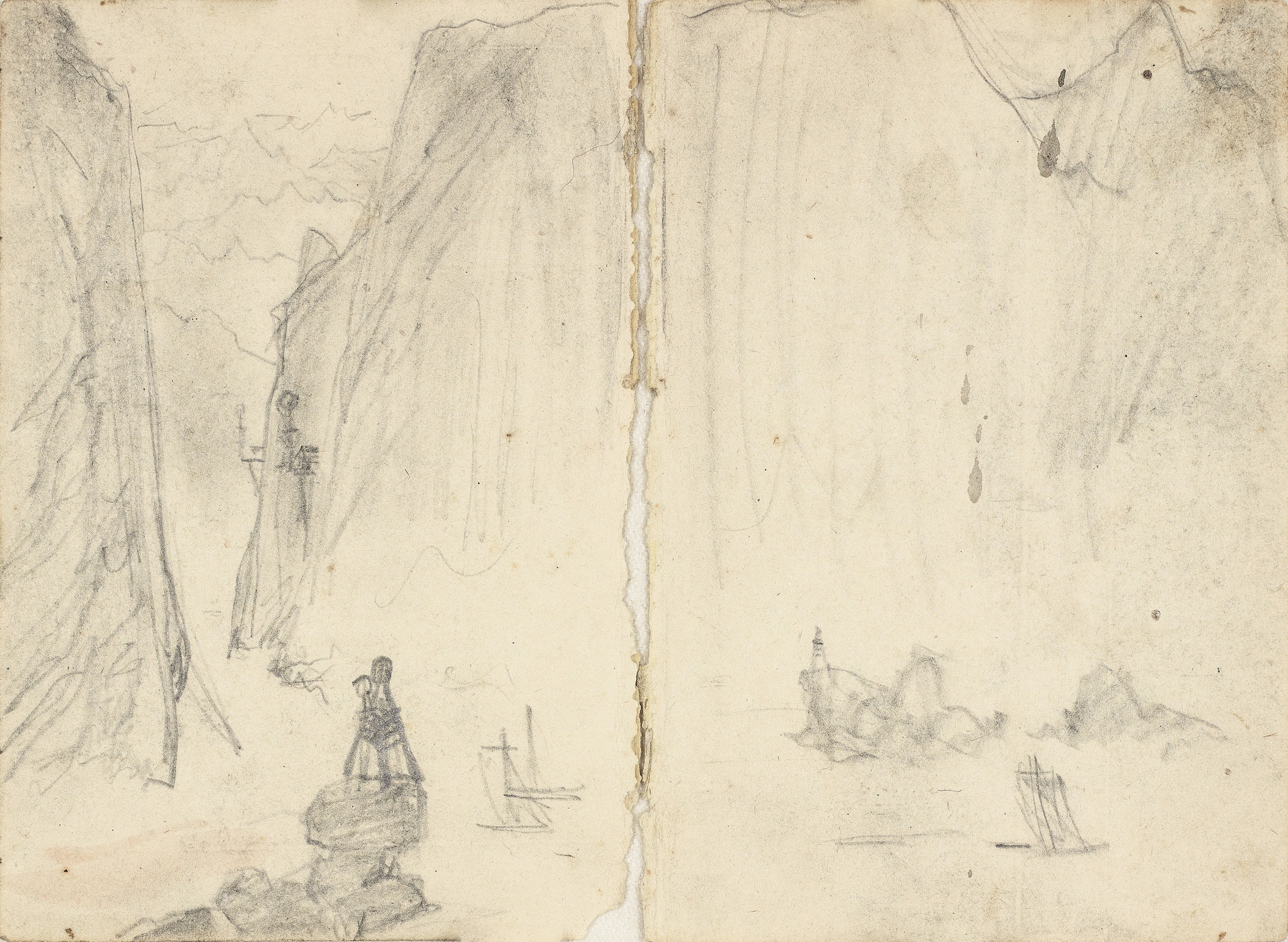 Night Voyage
-
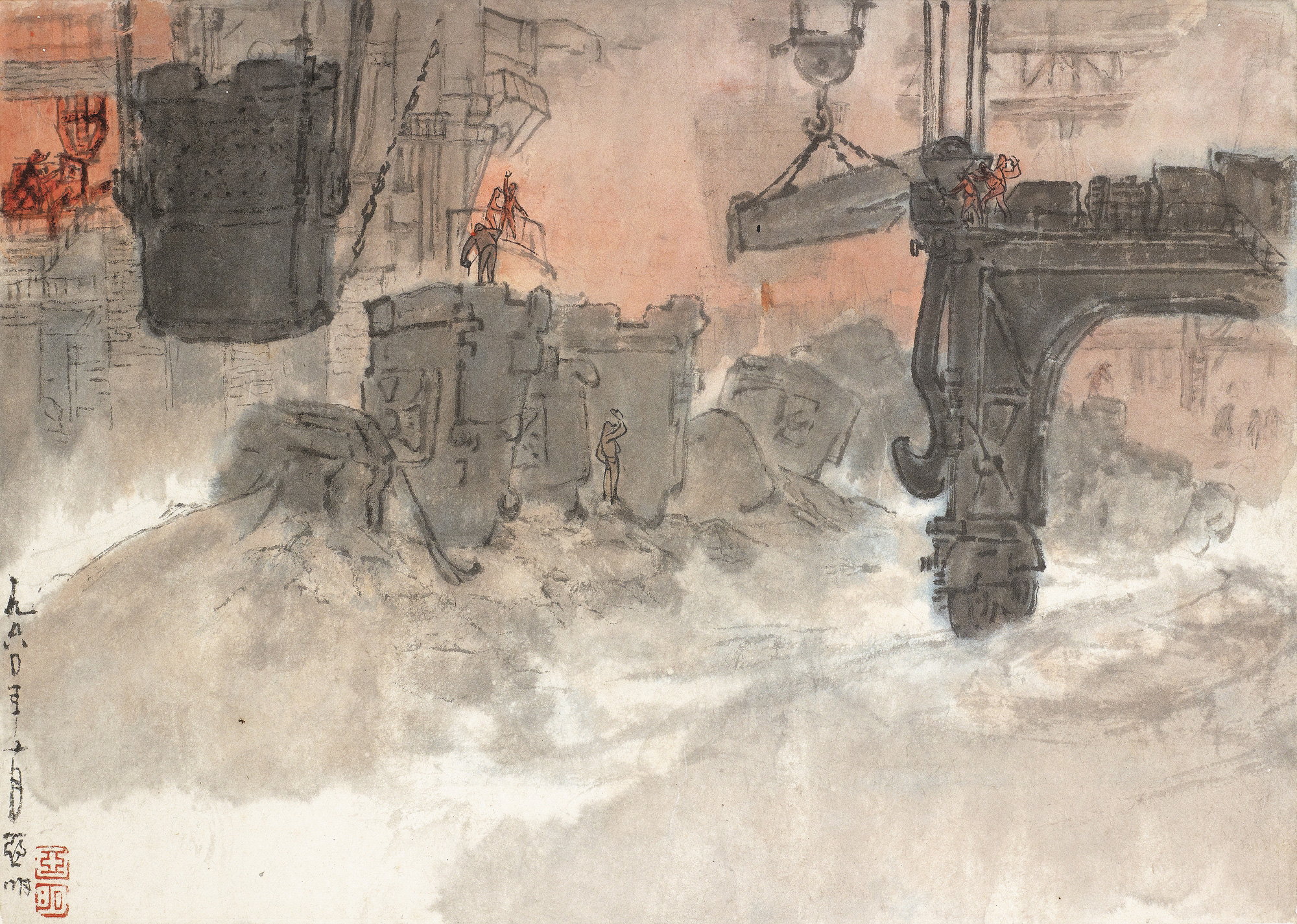 Steel Sketch Collection (No. 1...
-
 Autumn Village in a Water Town
-
 Flower Market in Hanoi
-
 Selling Parrots
-
 Engels Memorial Hall
-
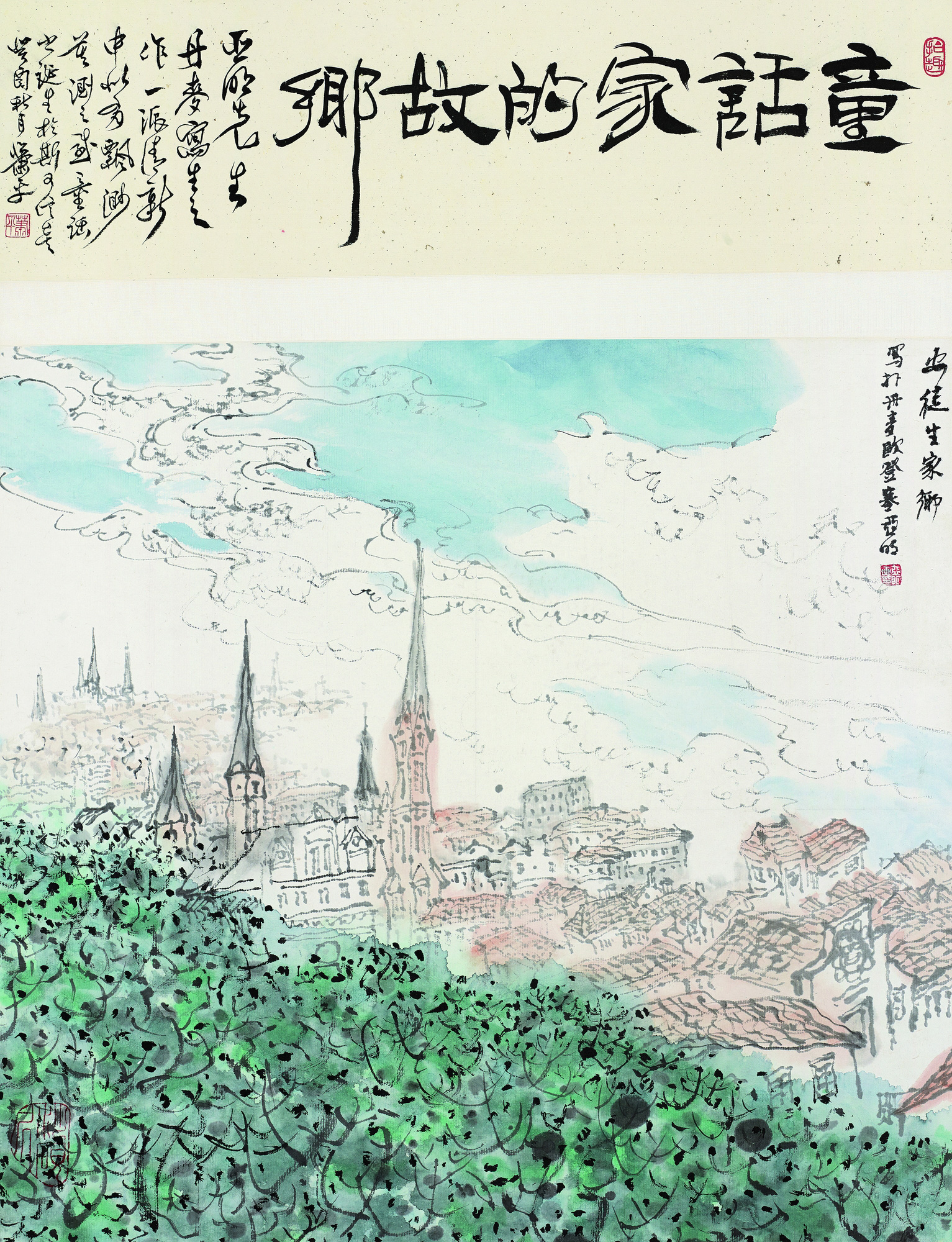 Andersen’s Hometown
-
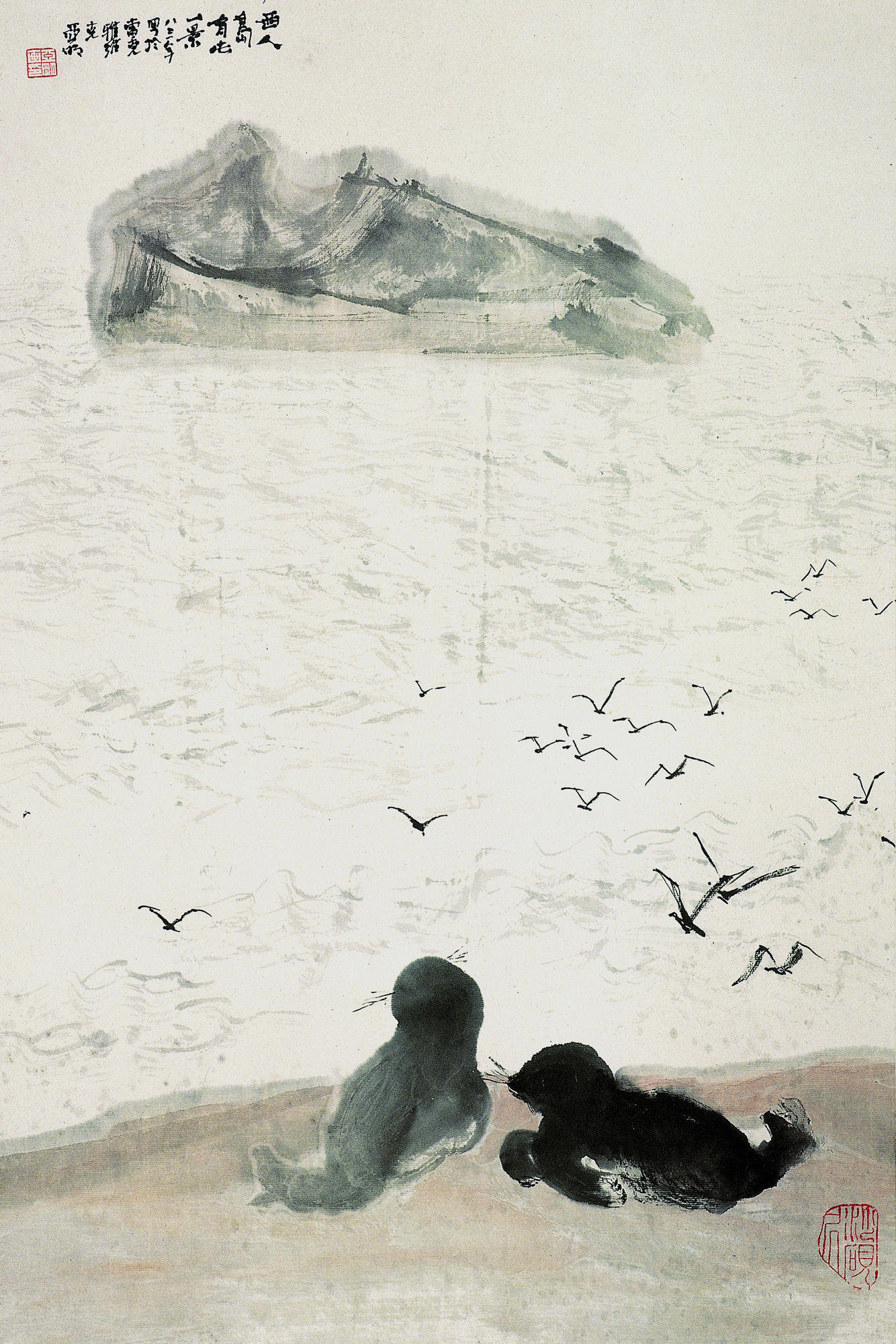 Westman Islands: Such a Scene