Inquiry of Insects: Qi Baishi’s Dialogues Amidst the Grass
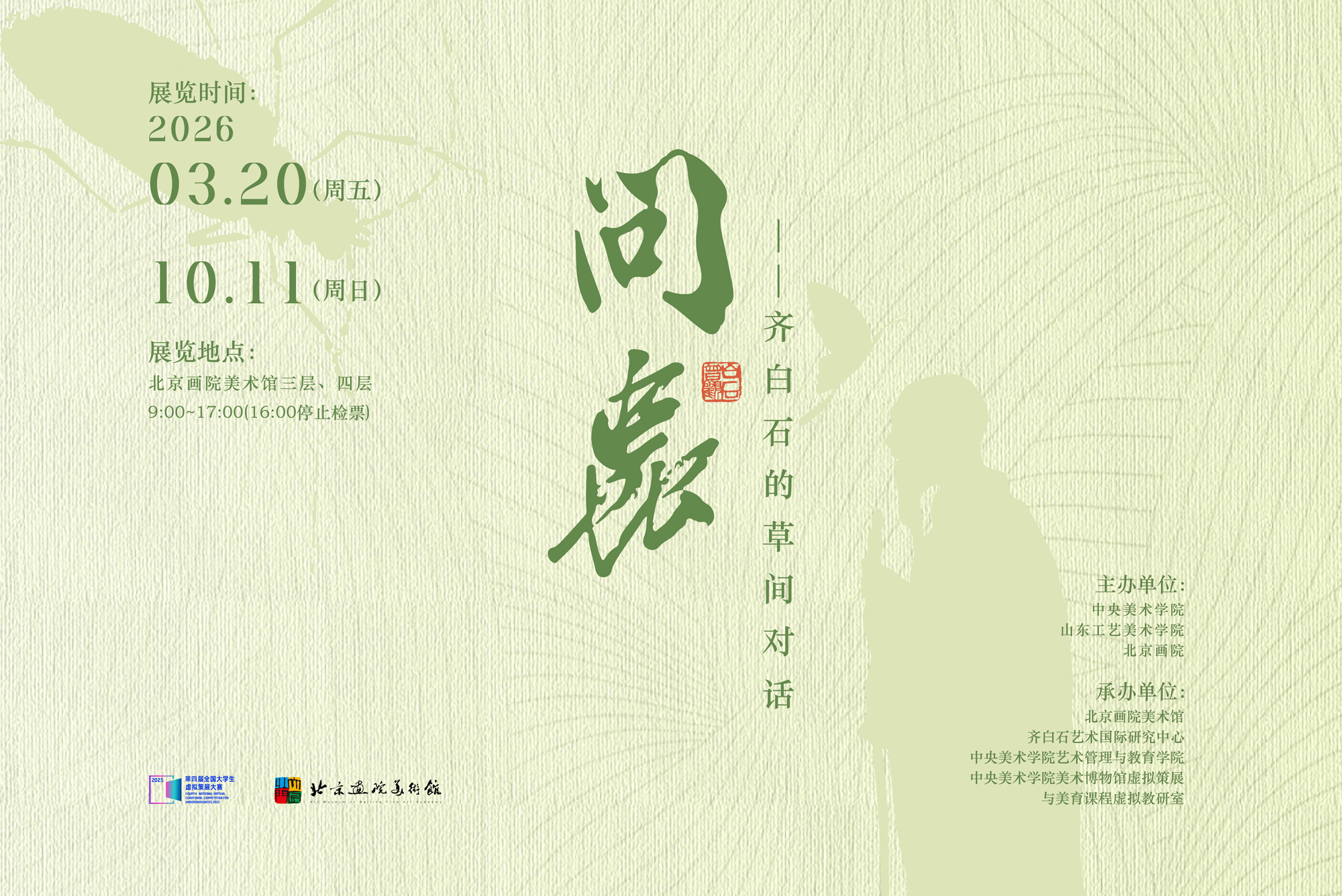
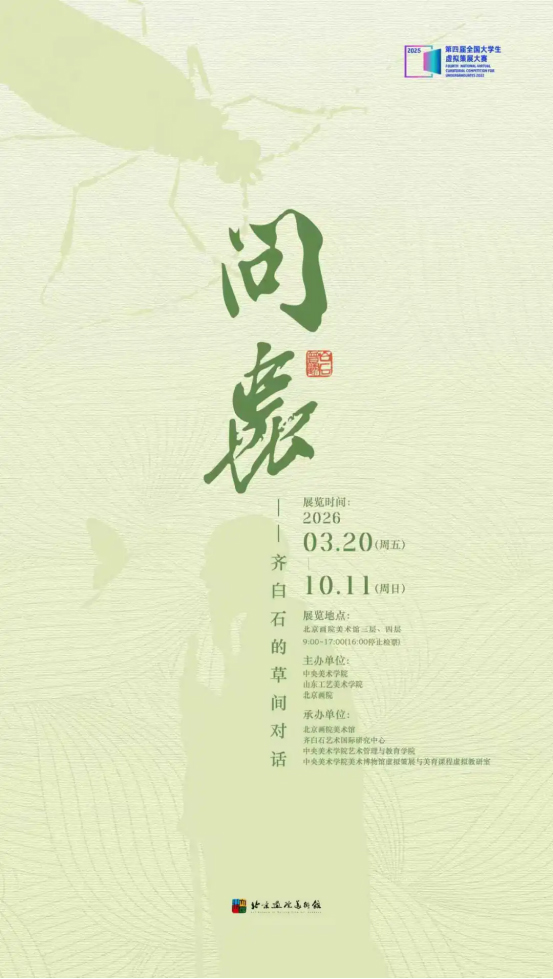
- show time:2026-03-20 to 2026-10-11
- Organizer:Central Academy of Fine Arts, Shandong University of Art and Design, Beijing Fine Art Academy
- venue:F3 and F4, Art Museum of Beijing Fine Art Academy
On March 20, 2026, the Art Museum of Beijing Fine Art Academy will unveil the exhibition titled “Inquiry of Insects: Qi Baishi’s Dialogues Amidst the Grass”. Co-hosted by the Central Academy of Fine Arts, Shandong University of Art and Design, and the Beijing Fine Art Academy, and organized by the Art Museum of Beijing Fine Art Academy in collaboration with the Qi Baishi International Research Center, the School of Art Management and Education of Central Academy of Fine Arts, and the Virtual Teaching Research Section for Virtual Curation and Art Education at the CAFA Art Museum, the exhibition runs through October 11.
“Inquiry of Insects” stems from Qi Baishi’s lifelong curiosity and inquiry into nature: How do shrimp swim? How do crabs walk? Why are cicada wings transparent? How are dragonfly wings so distinctly veined? From the creeks of the fields in Xiangtan to the studio desk in Peiping, Qi Baishi bowed between heaven and earth, observing, tracing, and inquiring day after day, akin to a “field researcher”. With a keen gaze, he explored; with delicate brushstrokes, he recorded every “dialogue” with the world. As the Grand Prize winner of the 4th Global Virtual Curatorial Competition for College Student (Qi Baishi Track), the exhibition marks the first viewing of Qi Baishi’s art through the lens of natural science. Every visitor is invited to become a “field researcher”, observing the microscopic yet self-contained realm of insects, and discovering Qi Baishi’s equal regard and affectionate gaze upon these fragile lives.
The Perfect Crossover: Qi Baishi’s Grass and Insects + Natural Science
Themed “Qi Baishi +”, the 4th Global Virtual Curatorial Competition for College Student (Qi Baishi Track) in 2025 paid tribute to Qi Baishi’s unconventional “crossover” spirit, embracing infinite possibilities through the creative sparks of young curatorial teams. Using Qi Baishi’s painted insects and entomology as a cross-boundary bridge and embracing arms, the exhibition “Inquiry of Insects: Qi Baishi’s Dialogues Amidst the Grass” undertakes a unique curatorial experiment.
Curated by a student team from Shandong University of Art and Design (Instructor: Xu Jun; Curators: Liu Xinyu, Wu Leping, Yang Mengyu), the exhibition springs from the curiosity and inquiry towards art and science that defines their age of twenty:
Did ancient China possess scientific illustrations and interpretations? How were insects depicted in the paintings and manuals of past dynasties? As a representative master of the freehand style, are Qi Baishi’s meticulous insects structurally accurate? How did the artist observe these tiny creatures?
Guided by these inquiries, the working team from the Beijing Fine Art Academy and the student group devoted themselves to the study of historical imagery and entomology. They conducted multiple study visits to the Insect Museum of China Agricultural University, receiving professional guidance from the university’s Insect Enthusiasts Association. Their research spanned the identification of insect species in Qi Baishi’s paintings, the methodologies of field investigation and laboratory research, and the biological traits and preferred habitats of the insects. Through repeated exchanges and extensive study, those teams jointly refined the narrative content of the exhibition “Inquiry of Insects: Qi Baishi’s Dialogues Amidst the Grass”.
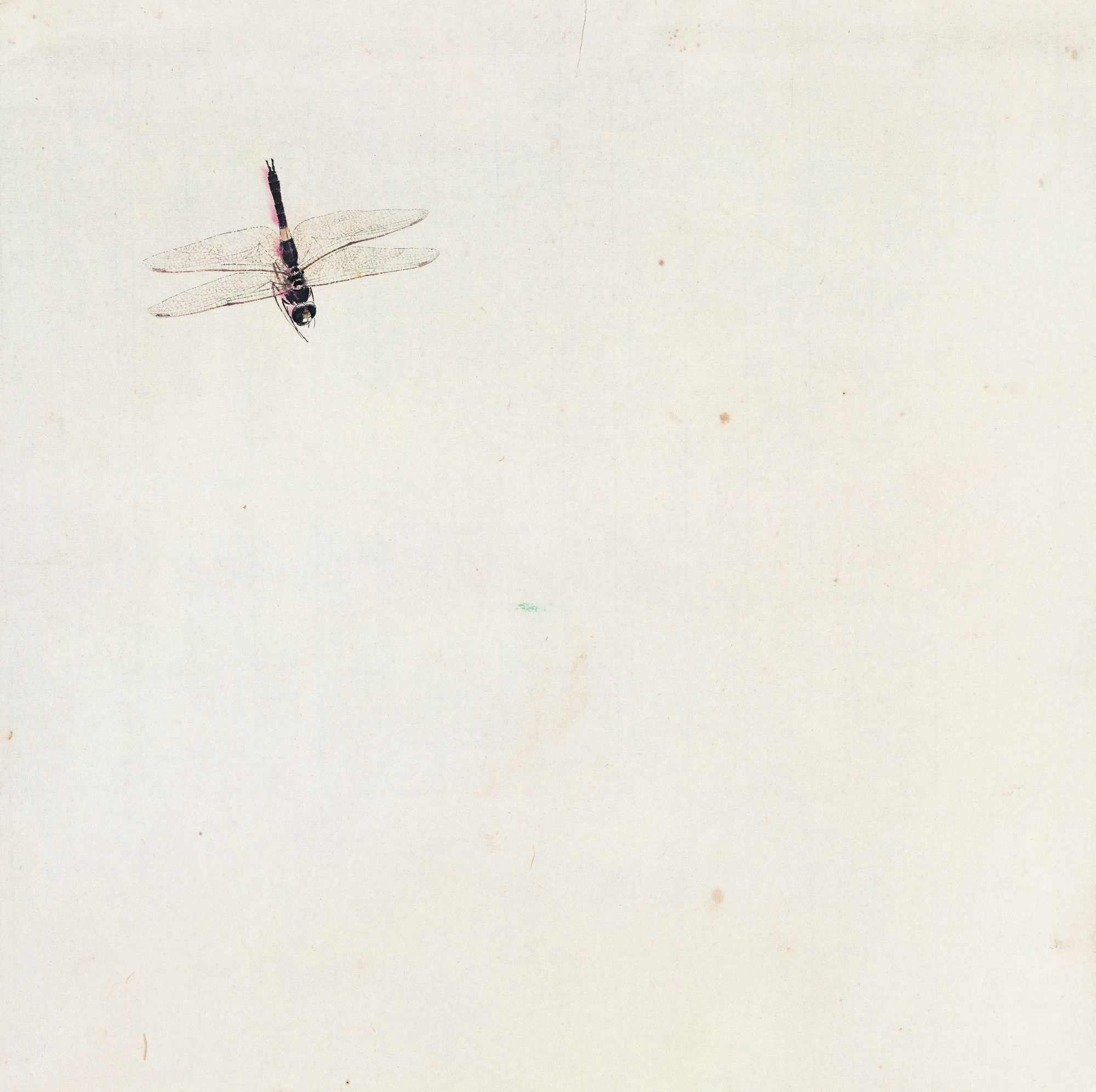
Dragonfly (Jade-belt Dragonfly)
Qi Baishi, Undated, 35 cm × 35 cm
Collection of the Beijing Fine Art Academy
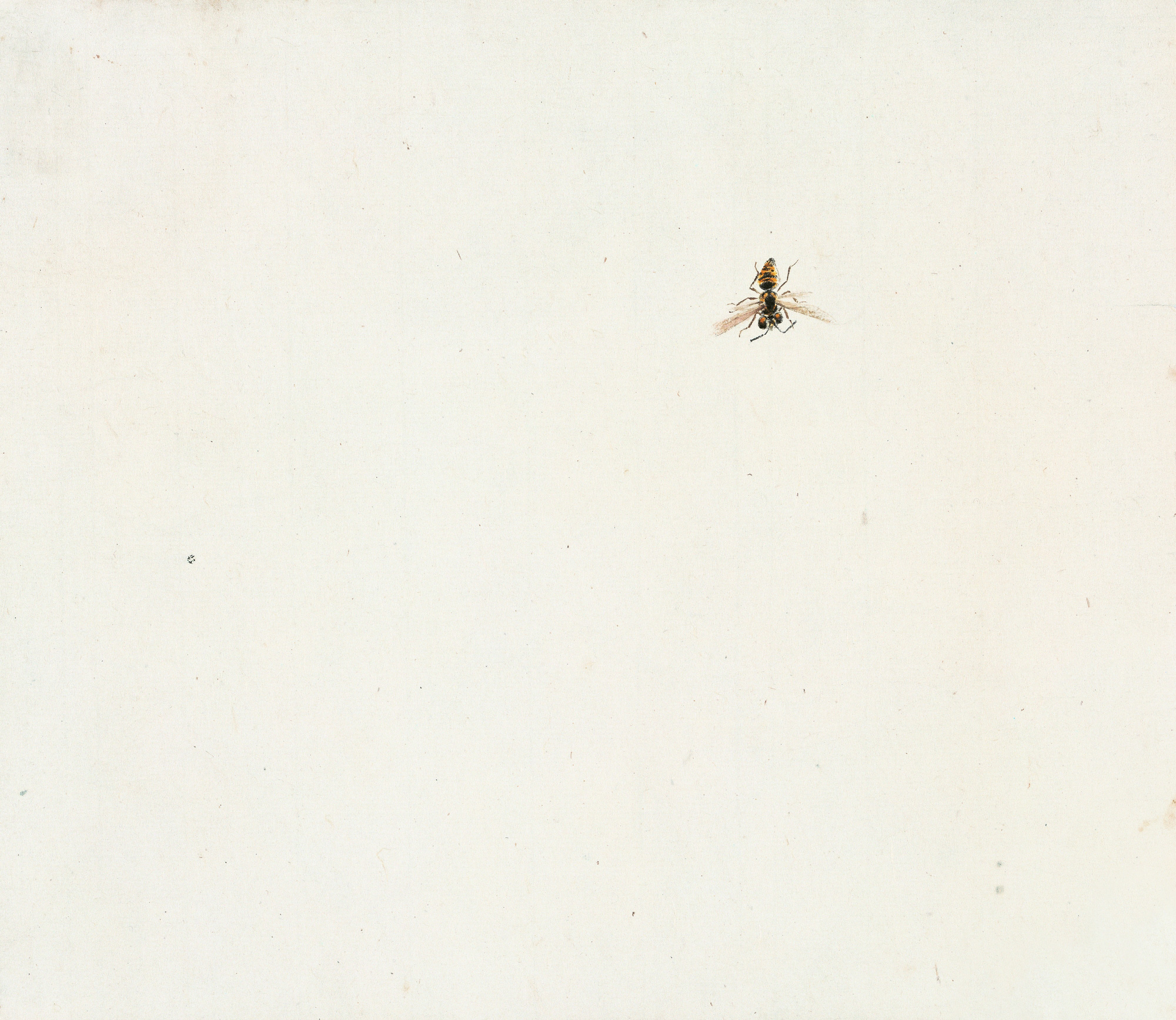
Hornet (Crabronidae, Tribe Larrini)
Qi Baishi, Undated, 20.5 cm × 24 cm
Collection of the Beijing Fine Art Academy
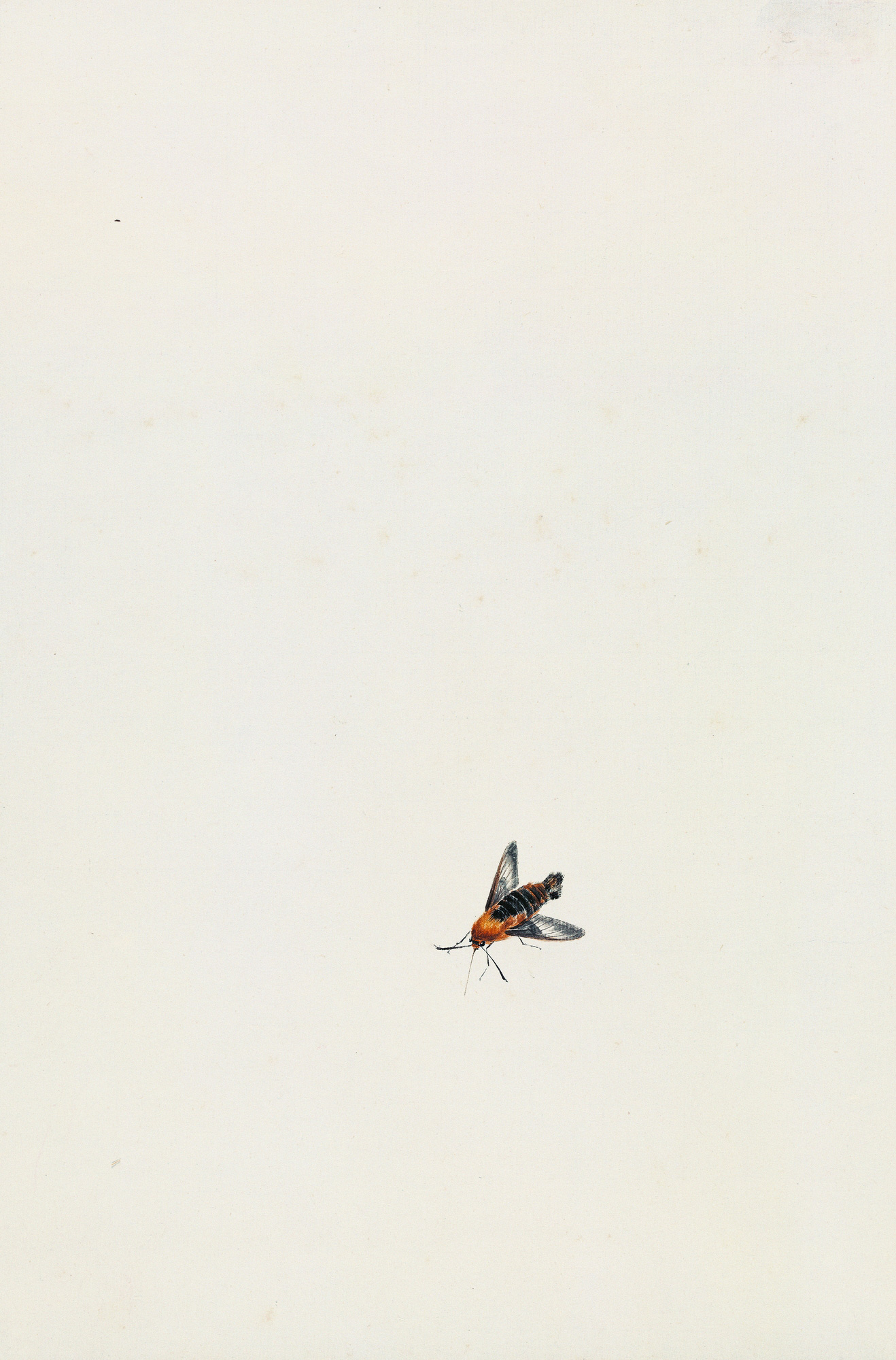
Hummingbird Hawk-moth (Macroglossum stellatarum)
Qi Baishi, Undated, 36.5 cm × 24.5 cm
Collection of the Beijing Fine Art Academy
The Most Comprehensive Gathering of Insects:
A Complete Taxonomy of Qi Baishi’s Grass and Insect Art
Scholars have noted that the variety of grass and insect species Qi Baishi painted throughout his life surpasses that of any previous artist. His oeuvre encompasses dozens of types, including dragonflies, grasshoppers, moths, cicadas, mantises, katydids, bees, flies, mole crickets, cave crickets, butterflies, crickets, green lacewings, spiders, ground beetles, beetles, lychee stink bugs, stink bugs, ladybugs, longhorn beetles, and whirligig beetles. Under his brush, these creatures are rendered with either exquisite details or expressive freehand. Regardless of style, they achieve a unity of form and spirit, appearing lifelike. He even depicted distinct families within specific species. For moths, his works cover tiger moths, emperor moths, geometer moths, hawk moths, wasp moths, snout moths, silkworm moths, and hummingbird hawk-moths; for bees and wasps, they include honeybees, paper wasps, hornets, and bumblebees. The subtle distinctions between them were all captured with precision by the artist. Although Qi Baishi was not an entomologist and may not have known the precise names of every insect, his grasp of the characteristics of these fragile lives was remarkably accurate. This stems from his attentive observation of nature and constitutes the very charm of his grass and insect works. For the first time, the exhibition presents a comprehensive display of Qi Baishi’s grass and insect paintings, juxtaposed with insect specimens and illustrated guides, offering a fresh perspective for the research and appreciation of Qi Baishi’s art.
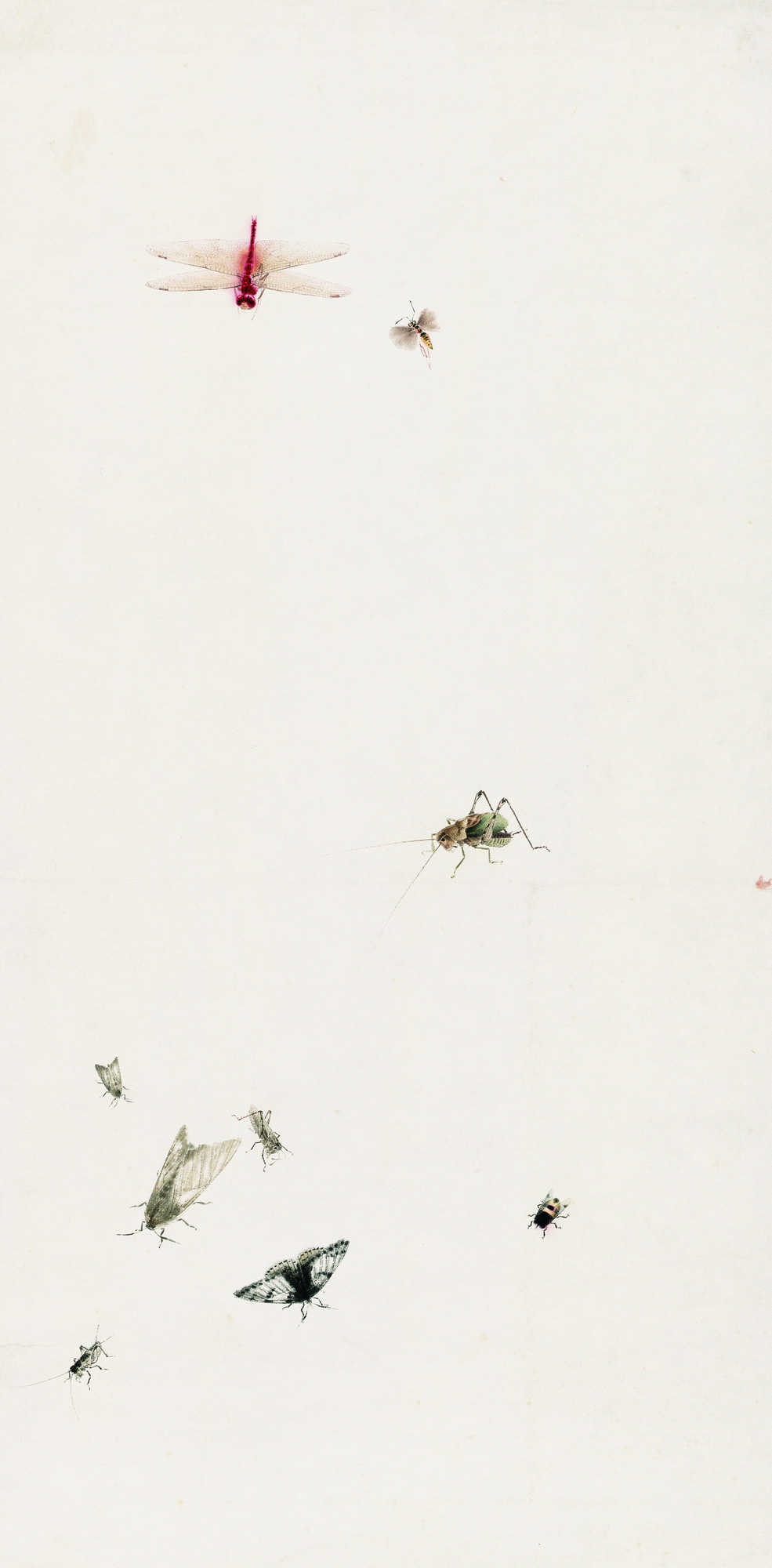
Sketch of Nine Insects
Qi Baishi, Undated, 67.5 cm × 34 cm
Collection of the Beijing Fine Art Academy
Maximum Engagement: A Day as a Field Researcher
“Inquiry of Insects” signifies not merely Qi Baishi’s questioning, but humanity’s inquiry into natural science. Indeed, humanity’s questioning and exploration of all existence is akin to a “field research”. Therefore, the exhibition threads through three units guided by the role of the “field researcher”, featuring five interactive spaces: “Where is It?” “Its Voice”, “The Displaced Truth”, “Tricks of Light”, and “Take a Guess”. Every visitor receives a Field Research Handbook to scrutinize the “traces” within Qi Baishi’s works during their visit, following the painter’s footsteps in “observing insects” and experiencing the joy of field research.
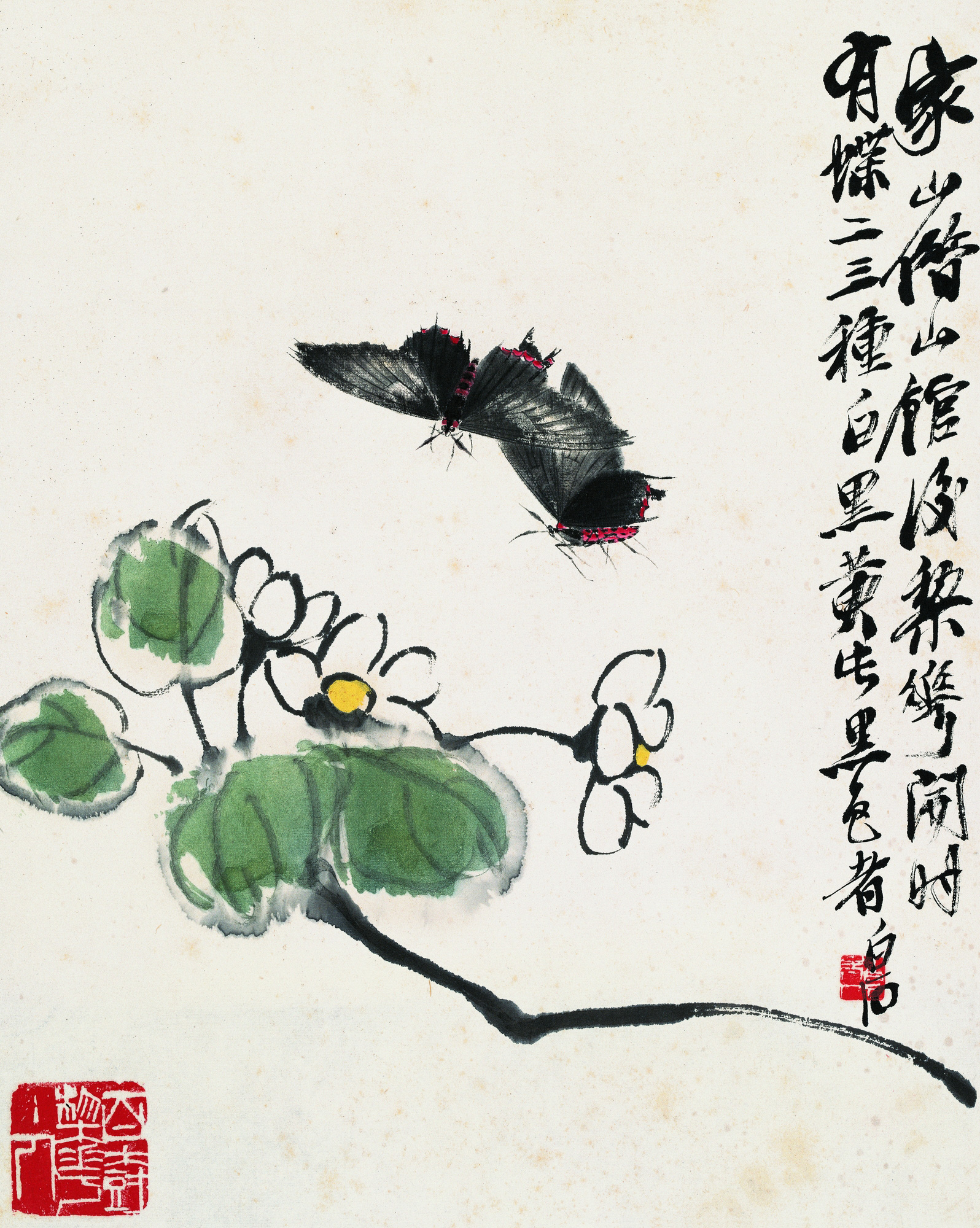
Flowers and Swallowtail Butterfly (One of Eight Leaves from the Fine Collection of Gongbi Insects)
Qi Baishi, 1949, 34 cm × 27 cm
Collection of the Beijing Fine Art Academy
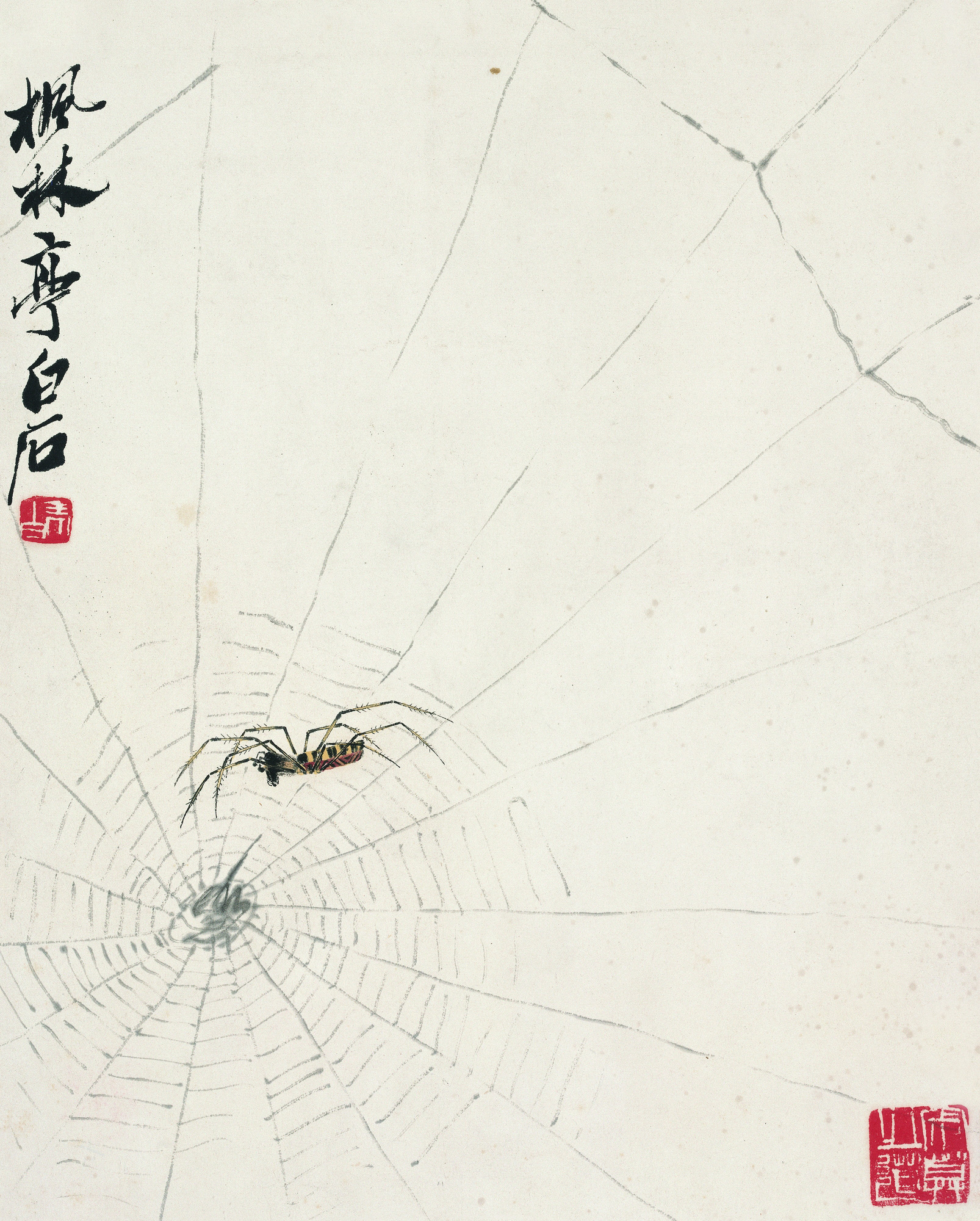
Pavilion in the Maple Forest (Seventh of Eight Leaves from Fine Collection of Gongbi Insects)
Qi Baishi, 1949, 34 cm × 27 cm
Collection of the Beijing Fine Art Academy
The unit “A Glimpse Across a Millennium” begins with naming and cognition, tracing how the ancients named all things and depicted the world through images. Exhibiting the Qing dynasty printed edition of Illustrated Erya with Phonetics by Guo Pu of the Eastern Jin Dynasty and various insect sketches by Qi Baishi, it reveals how insects transition from natural history classification to artistic imagery, demonstrating the wisdom and sentiment of the ancients in observing objects and capturing their forms.
Stepping into the “Half a Lifetime in a Squat” unit, visitors are invited to truly bow down and approach the grass. Behind those seemingly tranquil images, life dramas of predation, symbiosis, and rivalry are unfolding: a mantis waits for its moment, a dragonfly skims the water, and a cricket chirps while fluttering its wings among the grass blades. Under Qi Baishi’s brush, the veins on a dragonfly’s thin wings are clearly distinguishable; the elytra of beetles are hard and lustrous; even the patterns on the back of the “stink bug” are rendered faithfully. Between the millimeters, the reality and intensity of life are fully revealed. It is precisely in this squat that Qi Baishi, devoting half a lifetime, completed his affectionate gaze upon the microscopic world.
The “One Breath of Heaven and Earth” unit returns to the Chinese cosmology of the “Unity of Heaven and Man”. Exhibiting flower-and-bird masterpieces such as Sounds from the Dwelling and Osmanthus, Ribbon-Tailed Bird, and Bees, it portrays harmonious scenes of universal co-prosperity through the relationships between insects, birds, and aquatic life. The exhibition sublimates from delicate depictions of individual lives into the grand imagery of Eastern philosophy. In a single breath, Heaven and Earth coexist with me, and all things are one with me.
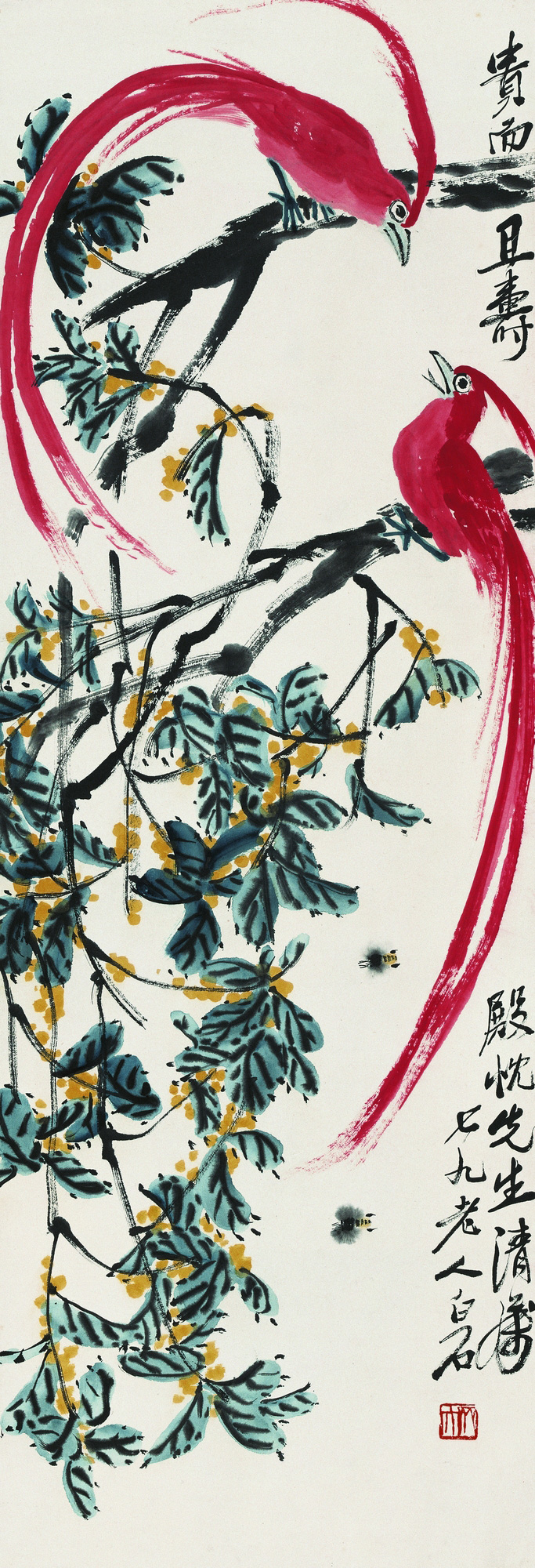
Osmanthus, Ribbon-Tailed Bird, and Bees
Qi Baishi, 1939, 98.5 cm × 33.5 cm
Collection of the Beijing Fine Art Academy
As you turn to leave the gallery and return to the bustling metropolis, or step into a corner of the suburbs or a park, may you often recall this “dialogue amidst the grass”.
Works Picture
-
Dragonfly (Jade-belt Dragonfly...
-
Hornet (Crabronidae, Tribe Lar...
-
Hummingbird Hawk-moth (Macrogl...
-
Sketch of Nine Insects
-
Flowers and Swallowtail Butter...
-
Pavilion in the Maple Forest (...
-
Osmanthus, Ribbon-Tailed Bird,...